





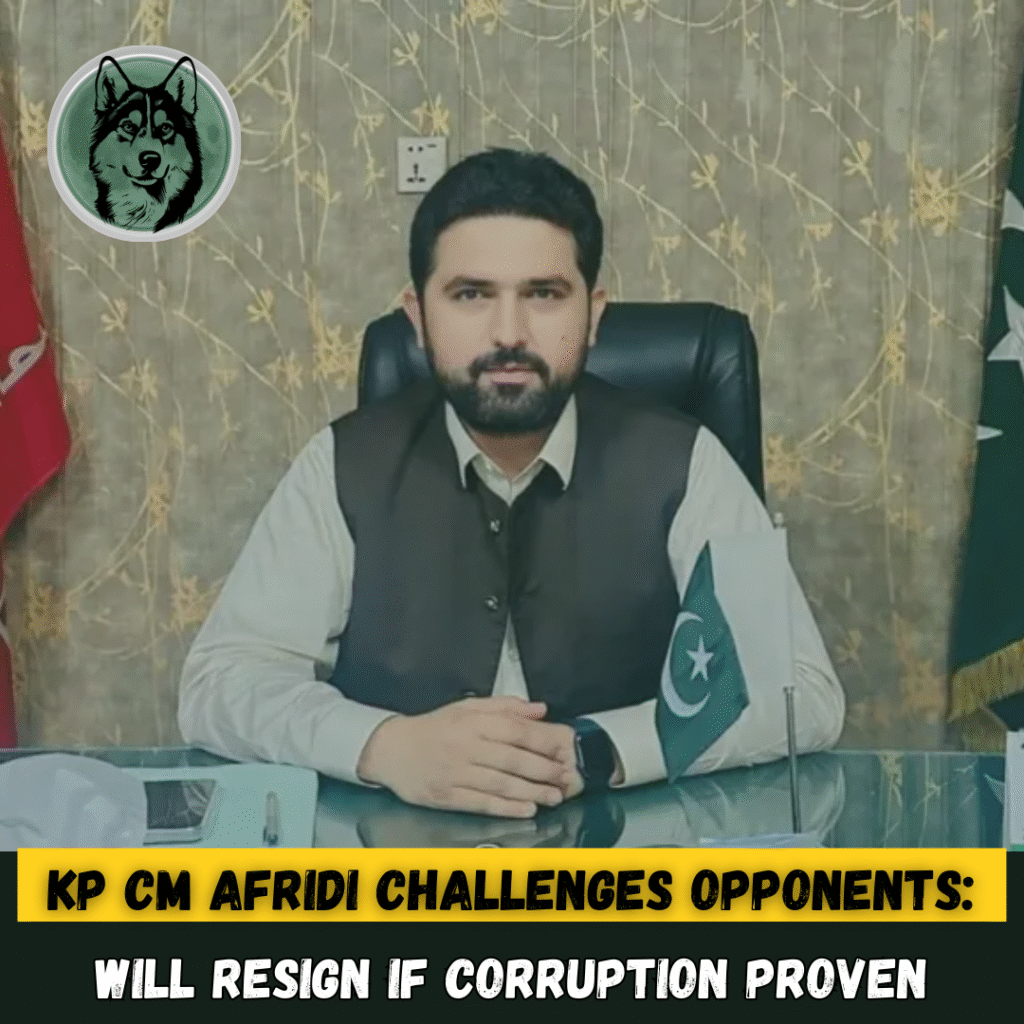
Chief Minister emphasizes accountability in provincial appointments
Khyber Pakhtunkhwa Chief Minister Sohail Afridi has issued a bold challenge to his political opponents, stating that he would resign from office if corruption is proven against him.
Speaking at a public gathering in Kohat, Afridi emphasized that no appointment in the province had been made on political recommendation and reiterated his commitment to merit-based governance and transparency.
What the Chief Minister Said
CM Afridi highlighted ongoing reforms across the province, particularly in police administration and recruitment processes. He declared that all new recruitments would be conducted through competitive tests organized by the Educational Testing and Evaluation Agency (ETEA).
He further stated that any individuals involved in corruption would be removed from service, sending a message of accountability to provincial employees and the public alike.
Where and When
The statements were made during a public meeting in Kohat, a key district in Khyber Pakhtunkhwa. Afridi addressed residents and local leaders, outlining his governance strategy and the steps being taken to ensure transparent administrative processes.
Why This Matters
Afridi’s remarks come amid ongoing political tensions and allegations of corruption in the province. By openly challenging opponents to provide proof of wrongdoing, the Chief Minister is attempting to:
- Strengthen public trust in provincial governance
- Reinforce the legitimacy of merit-based appointments
- Demonstrate proactive reforms in administrative and policing sectors
The announcement reflects a broader push to institutionalize transparency in KP’s provincial structures.
How Reforms Are Being Implemented
Key steps highlighted by Afridi include:
- Recruitment through ETEA-administered tests to ensure fairness
- Strengthening police reforms to enhance operational efficiency and accountability
- Immediate removal of officials found involved in corrupt practices
These measures aim to prevent nepotism, political favoritism, and corruption while improving public confidence in governance.
Analysing the Situation Deeply:
Afridi’s public challenge reflects both political strategy and governance commitment. While critics may view such statements as rhetorical, the adoption of ETEA testing and police reforms represents a concrete effort to institutionalize accountability.
The real test will lie in consistent implementation, monitoring of recruitment and transfers, and transparency in addressing corruption complaints.
If successfully executed, these reforms could set a precedent for merit-based governance in KP. Conversely, failure to act decisively could reinforce public skepticism about political promises.