



Gujranwala’s AQI hits 762, among the highest in the world.
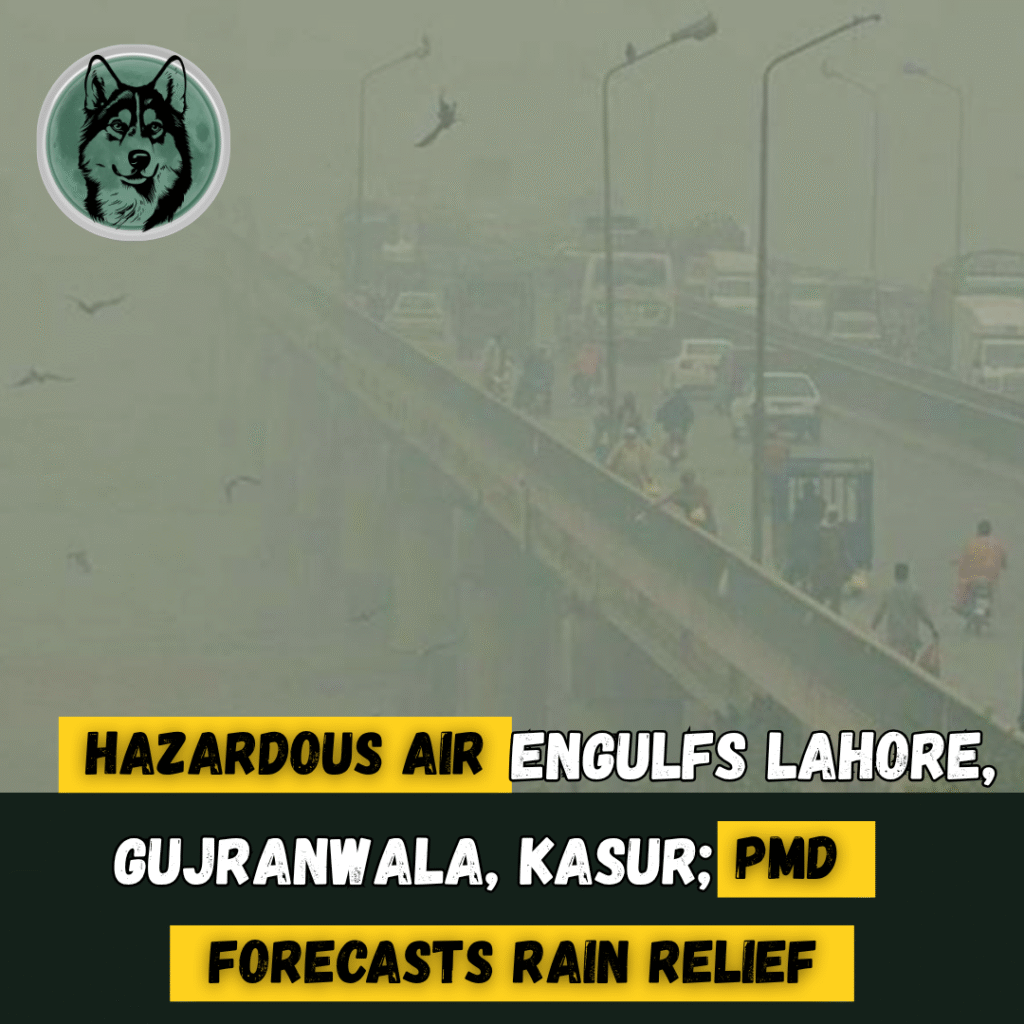
LAHORE, November 4, 2025: A dense blanket of smog enveloped Lahore and several other major cities of Punjab on Monday, pushing air quality levels to “hazardous” limits and raising fresh health concerns across the province.
According to data from the Punjab Environmental Protection Department (EPD), Lahore’s Air Quality Index (AQI) reached alarming levels 770 at Civil Secretariat, 718 at Sanda Road, and 714 at Bedian Road.
Other parts of the provincial capital, including Burki Road, Shahdara, Kahna, Multan Road, GT Road, Wagah, and Egerton Road, also reported dangerous readings, while comparatively lower but still unhealthy levels were recorded at DHA Phase 6 (369), Safari Park (357), and Punjab University (355).
Gujranwala Tops Global Pollution Index
Neighbouring Gujranwala, Sheikhupura, and Kasur experienced equally severe conditions. Data from international monitoring agency IQAir revealed that Gujranwala’s AQI spiked to 762, ranking among the highest pollution levels in the region and the world.
Environmental experts have warned that the situation could worsen further if stagnant weather conditions persist.
Cross-Border Winds Worsen Air Quality
According to the Punjab Environmental Protection Agency (EPA), the smog’s intensity increased sharply after 4am, driven by wind patterns from the east and southeast that carried smoke and particulate matter from across the border specifically from India’s Ludhiana, Jalandhar, Amritsar, and Hoshiarpur districts.
These pollutants drifted toward Lahore, Kasur, Sahiwal, Faisalabad, and Multan, exacerbating the already critical air quality situation. Experts warned that the inflow, combined with low wind speed, has caused pollutants to remain trapped near the ground, worsening the visibility and health risk.
Temperature Inversion Traps Pollutants
Meteorologists attributed the persistent smog to a temperature inversion layer, a phenomenon where cooler air near the ground becomes trapped under warmer air above. This inversion prevents vertical air mixing, allowing pollutants from vehicles, industries, and crop burning to accumulate near the surface.
The stagnant atmosphere has intensified the smog blanket, with limited chances of natural dispersion until the next rainfall or major weather shift.
Rain Predicted to Bring Temporary Relief
The Pakistan Meteorological Department (PMD) forecasted rain in Lahore and surrounding districts on Tuesday, which could provide much-needed relief by washing away dust and particulate matter from the atmosphere.
Meteorologists, however, cautioned that the improvement might be temporary unless sustained anti-pollution measures are implemented.
Health Department Issues Advisory
In response to the alarming pollution levels, the Punjab Health Department has issued a public health advisory urging citizens to avoid outdoor exposure, particularly between midnight and noon, and again after 7pm — periods when smog concentration is highest.
Special caution has been advised for children, the elderly, and people suffering from respiratory or cardiac conditions, as the dense smog increases the risk of asthma, bronchitis, eye irritation, and cardiovascular complications.
The department has also urged citizens to wear protective masks, use air purifiers indoors, and avoid unnecessary travel until the air quality improves.
Authorities Urged to Act
Environmental groups and residents have called on the government to take immediate steps to curb vehicular and industrial emissions, enforce crop-burning bans, and strengthen air quality monitoring across Punjab.
Experts say that without structural policy reforms, the region will continue to face recurring smog crises each winter, posing severe health and economic costs.
Conclusion
As Lahore and nearby cities continue to gasp under thick layers of toxic air, all eyes are now on the skies and the Pakistan Meteorological Department’s rain forecast for much-needed relief.
Until then, health experts warn that the smog may continue to choke Punjab’s skies, turning once-vibrant urban centres into virtual gas chambers.