





Strategic Energy Policy Aims to Strengthen Local Industry and akistan’s Energy Security
Government Clears Path for Advanced Battery Localisation
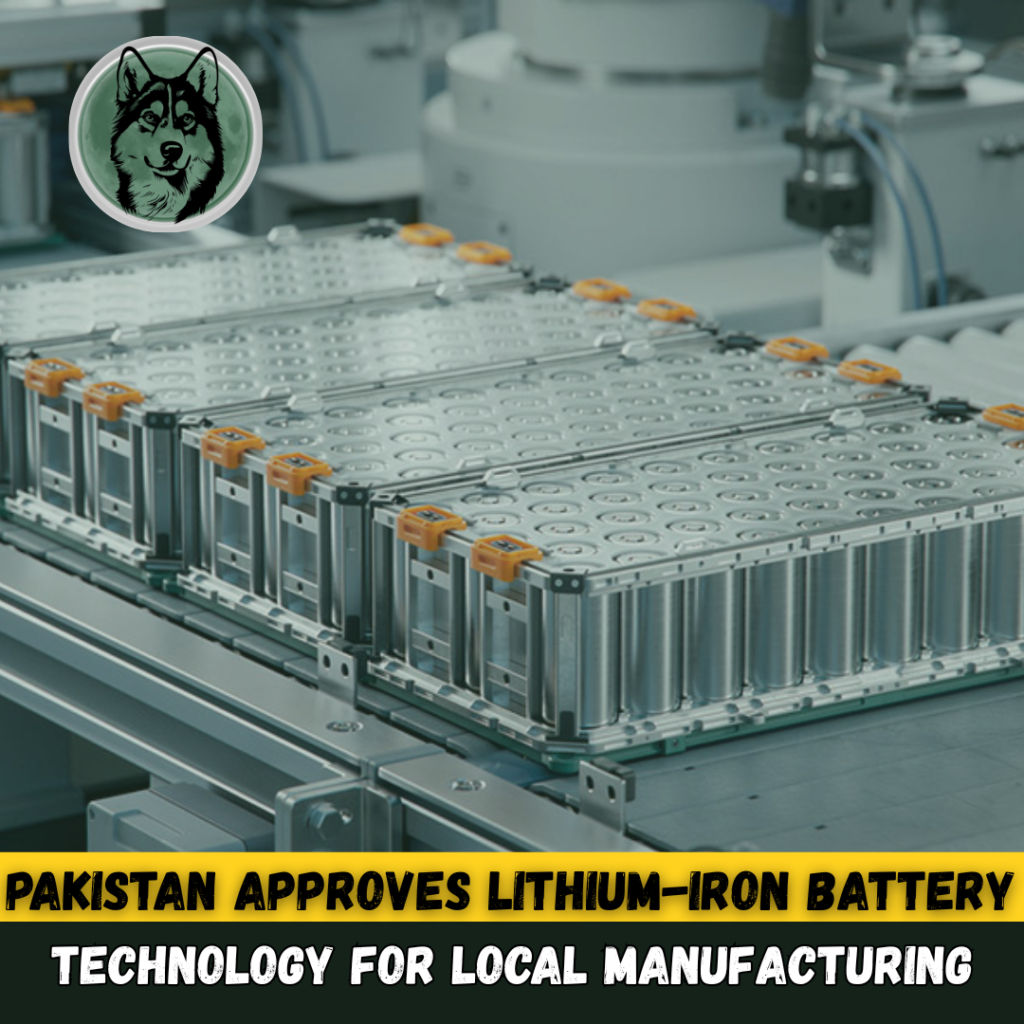
In a significant step toward energy independence and industrial modernisation, the federal government has granted approval for lithium-iron-phosphate (LFP) battery technology for initial localisation in Pakistan.
The decision marks a critical milestone in the country’s transition toward sustainable energy systems, laying the foundation for domestic manufacturing of next-generation energy storage solutions.
High-Level Policy Dialogue Reviews Battery Manufacturing Roadmap
The approval was granted during a high-level policy dialogue on lithium-ion batteries, held under the chairmanship of the Special Assistant to the Prime Minister on Industries and Production.
During the meeting, a comprehensive review was conducted of the National Lithium-Iron Battery Manufacturing Policy (2026–2031), which outlines Pakistan’s roadmap for developing a local battery manufacturing ecosystem.
Officials described the policy as future-focused, industry-driven, and strategically aligned with global clean-energy trends.
Private Sector and Global Partnerships Key to Success
Addressing the session, the SAPM emphasised that collaboration with the private sector and international investors will be essential for building a resilient and competitive energy industry.
He stated that sustainable energy solutions and advanced storage technologies represent the future of industrial growth, adding that Pakistan must position itself as an attractive destination for clean-energy investment.
Energy Storage Policy Linked to National Energy Security
During the meeting, instructions were issued to the Engineering Development Board (EDB) to formally integrate new-generation energy storage technologies into Pakistan’s broader national energy security framework.
Officials stressed that energy storage is no longer optional, but a strategic necessity for stabilising power supply, supporting renewable energy, and reducing reliance on imported fuels.
Policy Developed Through Broad-Based Collaboration
The lithium-iron battery manufacturing policy has been prepared with extensive input from federal and provincial ministries, along with contributions from industry stakeholders, academic institutions, and international experts.
Authorities believe this inclusive approach will help ensure smooth implementation, technological viability, and long-term sustainability of the localisation initiative.
A Step Toward a Cleaner, Self-Reliant Energy Future
Experts say the approval of lithium-iron-phosphate battery technology could play a transformational role in Pakistan’s energy landscape by supporting electric mobility, renewable power integration, and industrial innovation.
With localisation now approved, the focus is expected to shift toward investment mobilisation, technology transfer, and capacity building, positioning Pakistan for a cleaner and more secure energy future.