





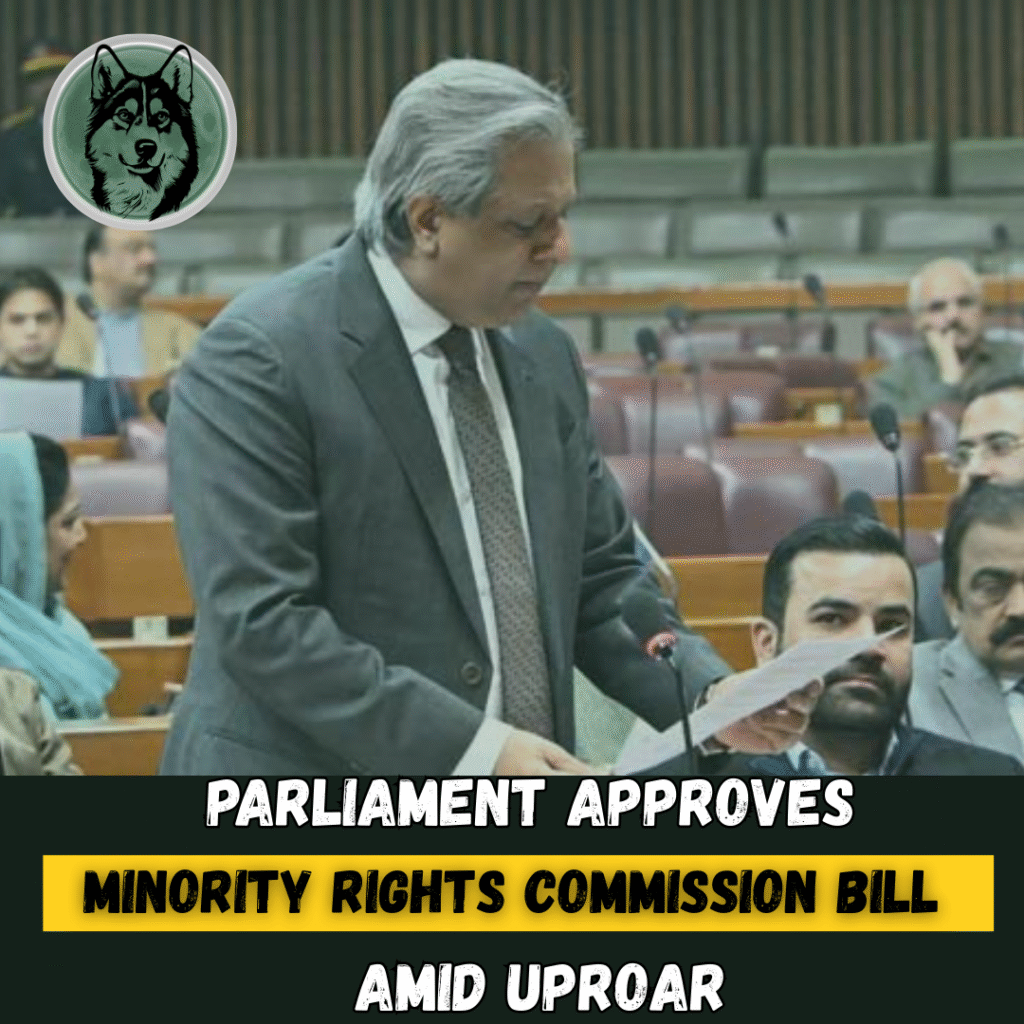
Amendments accepted after fierce debate in joint session
Bill Approved After Hours of Conflict
A joint session of parliament approved the National Commission for Minority Rights Bill 2025 following hours of confrontations, sloganeering and disruptions. The session chaired by Speaker Sardar Ayaz Sadiq saw lawmakers challenging each other, exchanging remarks and objecting to legislative procedures.
Government Assures Compliance with Islamic Principles
Law Minister Azam Nazir Tarar repeatedly clarified that no legislation can contradict the Quran and Sunnah. He said the bill meets constitutional requirements and creates a commission without punitive powers. Several clauses including suo motu powers and precedence of laws were abolished following amendments.
Opposition Concerns and Religious Sensitivities
JUI-F chief Maulana Fazlur Rehman criticized the timing and content of the bill, warning that no law conflicting with Islam would be tolerated. PTI chairman Barrister Gohar echoed these concerns, arguing that the bill might affect the hierarchy of existing laws.
Dramatic Scenes in the House
PTI members surrounded the speaker’s desk, shouted slogans and threw agenda copies toward the dais. Despite the chaos, the bill was passed with one hundred sixty votes in favour and seventy nine votes against.
Key Amendments Accepted
The House approved multiple amendments including the removal of Clause 35, abolition of the commission’s suo motu authority and suggestions by Barrister Gohar and Senator Kamran Murtaza.
Further Legislative Business
The session also passed several other bills including the Biological and Toxin Weapons Implementation Bill and introduced legislation for new educational institutions.
What Happened and Where
The events unfolded in a joint parliamentary session in Islamabad where political and religious tensions overtook the legislative agenda.
Why the Bill Triggered Protests
Opposition lawmakers argued that the bill may contradict Islamic provisions and expressed concern over perceived legal precedence clauses.
How the Government Responded
The government amended contested clauses and reassured members that Islamic principles remain fully protected. Analysts note that the political polarization reflects deeper divides on religious sensitivities and minority rights.