
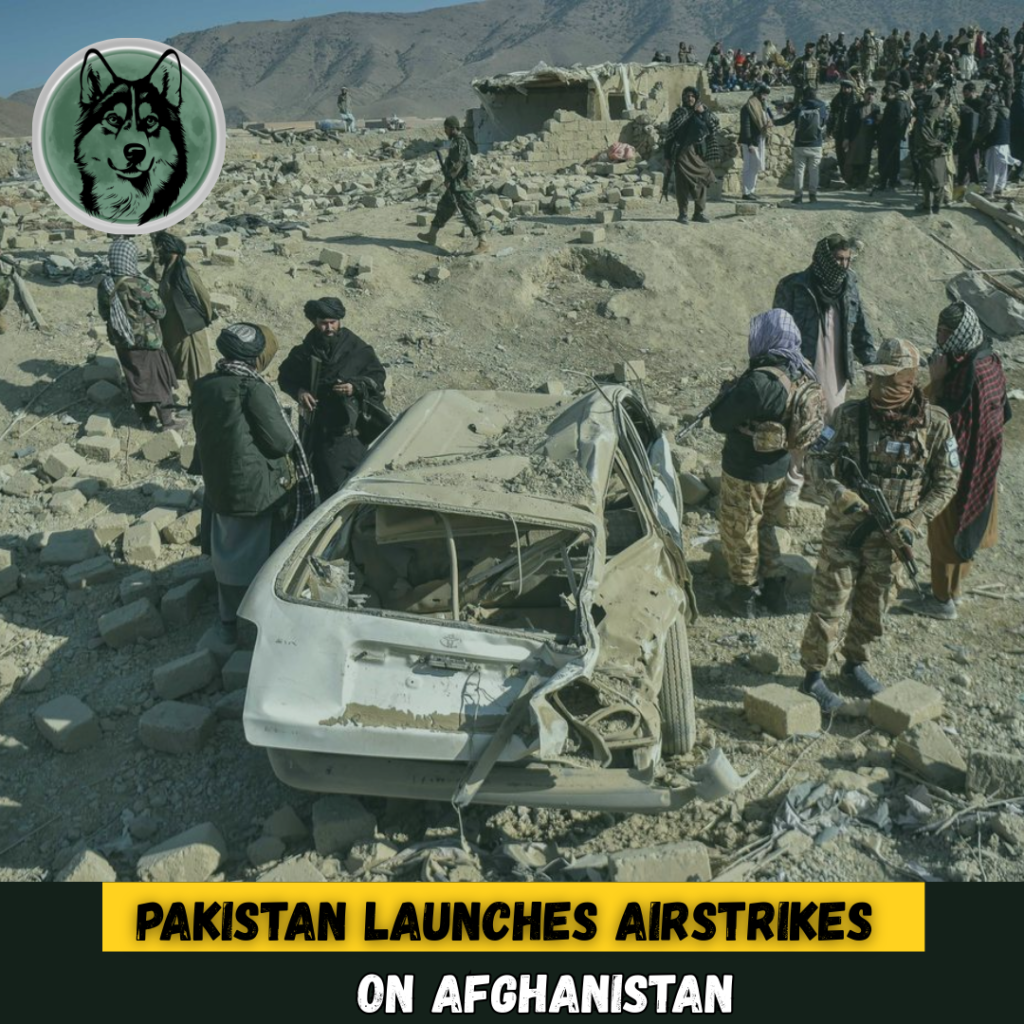




Islamabad Says Precision Operation Killed 80+ Militants After Deadly Suicide Attacks
Pakistan Confirms Intelligence-Based Airstrikes
Pakistan late Saturday confirmed carrying out intelligence-driven airstrikes inside Afghanistan, targeting what it described as seven terrorist camps linked to recent suicide bombings in Pakistan.
According to an official statement released overnight, the strikes were launched in response to a series of deadly attacks during the holy month of Ramazan. These included a suicide bombing at an Imambargah in Islamabad and separate blasts in Bajaur and Bannu districts of Khyber-Pakhtunkhwa.
Islamabad stated that it possessed “conclusive evidence” showing the attacks were orchestrated by militant leaders operating from Afghan territory.
Targeted Groups: TTP and ISKP
Pakistan said the operation focused on camps belonging to factions of the Tehreek-e-Taliban Pakistan (TTP), which it refers to as “Fitna al Khwarij (FAK),” as well as fighters linked to the Islamic State of Khorasan Province (ISKP).
The targeted sites were reportedly located in Afghanistan’s eastern provinces, including:
- Nangarhar
- Paktika
- Khost
Security sources claimed the strikes destroyed seven militant centers and eliminated more than 80 militants. The operation was described as “selective, limited in scope, and based on actionable intelligence.”
Officials emphasized that the objective was to dismantle infrastructure used for planning and facilitating cross-border attacks.
Rising Terror Attacks Prompt Retaliation
The airstrikes come amid a renewed surge in militant violence in Pakistan’s western regions. Over the past year, attacks attributed to the TTP and ISKP have intensified, significantly straining relations between Islamabad and Kabul.
Pakistan has repeatedly urged Afghan authorities to take “visible and verifiable” steps to prevent militant groups from using Afghan soil to conduct attacks. Officials argue that failure to curb such activity undermines regional stability and bilateral ties.
Kabul Condemns Airspace Violation
Afghanistan’s interim government strongly rejected Pakistan’s account of events. The Afghan Ministry of Foreign Affairs summoned Pakistan’s ambassador and condemned what it described as a violation of Afghan sovereignty.
Kabul alleged that Pakistani forces targeted areas in Nangarhar and Paktika provinces, calling the airstrikes a “provocative act” and a breach of territorial integrity. Afghan officials also raised concerns about civilian casualties — a claim Pakistan firmly denied.
Islamabad maintains that only militant hideouts were struck and that no civilians were targeted.
Reference to Doha Agreement
Pakistan’s statement also referenced the 2020 Doha Agreement between the United States and the Afghan Taliban, under which Afghan territory was pledged not to be used to threaten other nations.
Islamabad called on the international community to play a constructive role in ensuring that Afghan authorities uphold these commitments.
Regional Implications and Diplomatic Fallout
Analysts warn that the latest escalation could further complicate already fragile relations between the two neighboring countries. Both nations share a long and historically contentious border, and diplomatic tensions have simmered since the Taliban returned to power in Afghanistan.
While Pakistan signals determination to respond to cross-border terrorism, diplomatic observers say preventing further military escalation will be the immediate challenge.
For now, Islamabad appears intent on sending a clear message: cross-border militant attacks will draw a direct response.