




Foreign minister says unilateral suspension of treaty violates international law
Pakistan has strongly condemned India’s unilateral suspension of the Indus Waters Treaty, warning that any attempt to divert or block Pakistan’s allocated water would be considered an act of war and a serious threat to peace in South Asia.
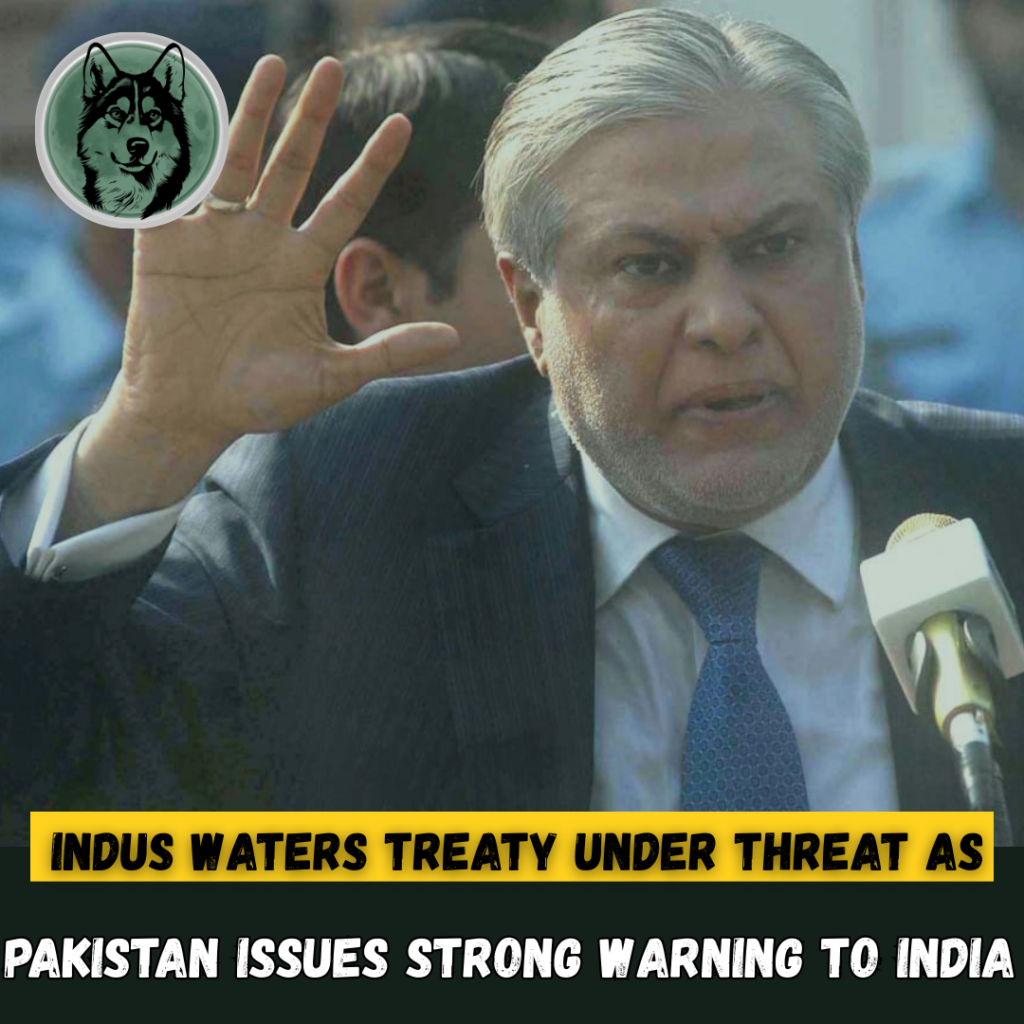
Addressing foreign diplomats in Islamabad, Deputy Prime Minister and Foreign Minister Ishaq Dar said India’s actions violate international law, the Vienna Convention, and the spirit of one of the world’s most enduring water-sharing agreements.
Treaty Cannot Be Suspended Unilaterally
Dar emphasized that the Indus Waters Treaty cannot be suspended by one party alone, stating that India’s move has placed regional peace at serious risk. He said Pakistan remains committed to resolving disputes through peaceful and diplomatic means but will not compromise on the water rights of its people under any circumstances.
He warned that millions of lives and livelihoods in Pakistan depend on uninterrupted water flows governed by the treaty.
Accusations of Weaponizing Water
The foreign minister accused India of using water as a weapon, citing recent releases of water into the Chenab River without prior notification, a move he said endangered downstream communities in Pakistan.
According to Dar, such actions pose direct threats to public safety, economic stability, and national security, while also disrupting Pakistan’s agricultural system, which relies heavily on treaty-regulated water flows.
He stressed that water is a lifeline for Pakistan’s economy and warned that any deliberate disruption would have devastating humanitarian and economic consequences.
Withholding Data and Treaty Violations
Dar further alleged that India has withheld hydrological data and undermined the joint monitoring mechanisms required under the Indus Waters Treaty. He said India failed to provide technical information essential for transparency and cooperation.
He also pointed to Indian hydroelectric projects, including Kishanganga and Ratle, stating that they violate the treaty’s technical provisions. Pakistan, he said, has pursued the matter through diplomatic and legal channels via the Indus Water Commissioner, acting fully within the treaty framework.
Call for International Intervention
Urging the international community to act, Dar said global silence would only embolden treaty violations that threaten regional stability.
“The Indus Waters Treaty is not merely a bilateral agreement; it is a cornerstone of peace in South Asia,” he said, calling for immediate international engagement to ensure its full restoration.
He also referenced recent remarks by India’s home minister indicating that the treaty would not be restored and that water would be diverted, saying such statements confirm New Delhi’s intent to unilaterally alter the agreement.
Dar concluded by reaffirming Pakistan’s stance: the country seeks peace, but its water rights are non-negotiable.