





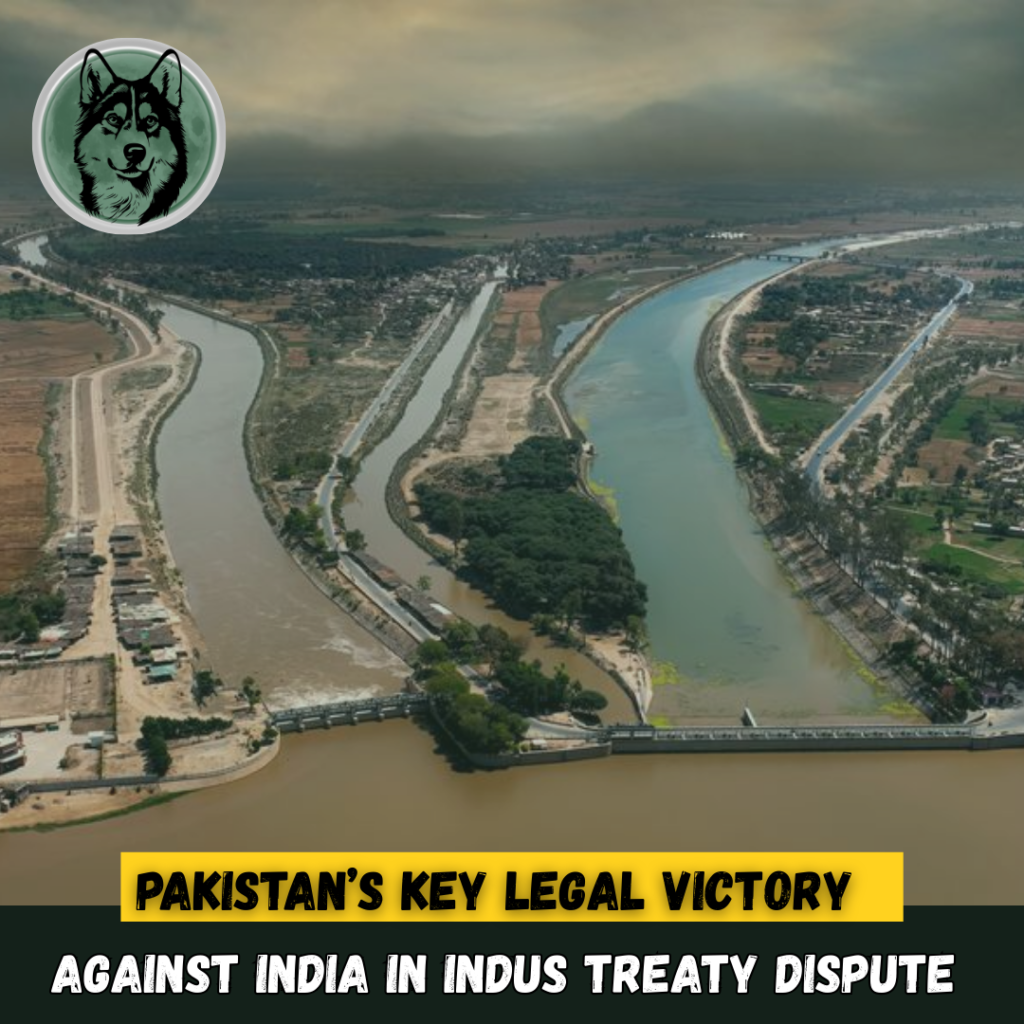
Pakistan’s Key Legal Victory Against India in Indus Treaty Dispute at International Arbitration
Pakistan’s key legal victory against India in Indus treaty dispute has marked a major procedural breakthrough as an international arbitral tribunal ordered India to disclose critical operational records of disputed hydropower projects.
The ruling strengthens Pakistan’s position in the long-running Indus Waters Treaty dispute and reinforces the principle of transparency in shared river management.
International Court Orders India to Share Hydropower Project Records
The International Court of Arbitration has directed India to submit working papers and operational logbooks related to the Baglihar and Kishanganga hydropower projects, both built on rivers allocated to Pakistan under the Indus Waters Treaty.
According to the tribunal’s 13-page procedural order, India must provide the required documents by February 9, 2026, or formally explain any refusal to comply.
Pakistan Asked to Clarify Document Requests
While granting relief to Pakistan, the tribunal also instructed Islamabad to specify the exact documents required by February 2, 2026, a step aimed at streamlining the evidentiary process ahead of the next phase of proceedings.
The court confirmed that the arbitration process will continue regardless of India’s participation, ensuring that treaty adjudication is not stalled.
Hearings in The Hague to Resume in February
The second phase of hearings on the merits of the case is scheduled to take place in The Hague from February 2 to 3, 2026.
A high-level Pakistani delegation, led by the attorney general and including the Pakistan Commissioner for Indus Waters, is set to participate in the proceedings.
Officials describe the tribunal’s directive as a critical advancement in Pakistan’s pursuit of treaty compliance and accountability.
Why Baglihar and Kishanganga Projects Matter
Pakistan has consistently objected to the design and operation of the Baglihar and Kishanganga hydropower plants, arguing that their technical features could allow manipulation of river flows, violating treaty limits.
Access to operational logbooks is considered essential evidence to assess compliance with provisions governing water storage, discharge, and flow regulation under the Indus Waters Treaty.
Water Security Risks Add Urgency to Legal Battle
The legal development comes as Pakistan’s water security situation reaches a critical threshold.
Government officials have warned of escalating risks to agriculture, drinking water supplies, flood control, and food security, driven by climate volatility, regional tensions, population growth, and infrastructure delays.
These concerns were recently highlighted during a National Assembly briefing, outlining long-term national water management challenges.
Impact of India’s Treaty Stance Raises Alarm
Lawmakers were informed that India’s unilateral move to place the Indus Waters Treaty in abeyance has disrupted hydrological data sharing and technical coordination.
Officials cautioned that any interruption or reduction in River Chenab flows could devastate millions of acres irrigated by the Upper and Lower Chenab Canal systems.
Authorities have already observed irregular flow patterns, intensifying concerns over crop sustainability and long-term food security.