





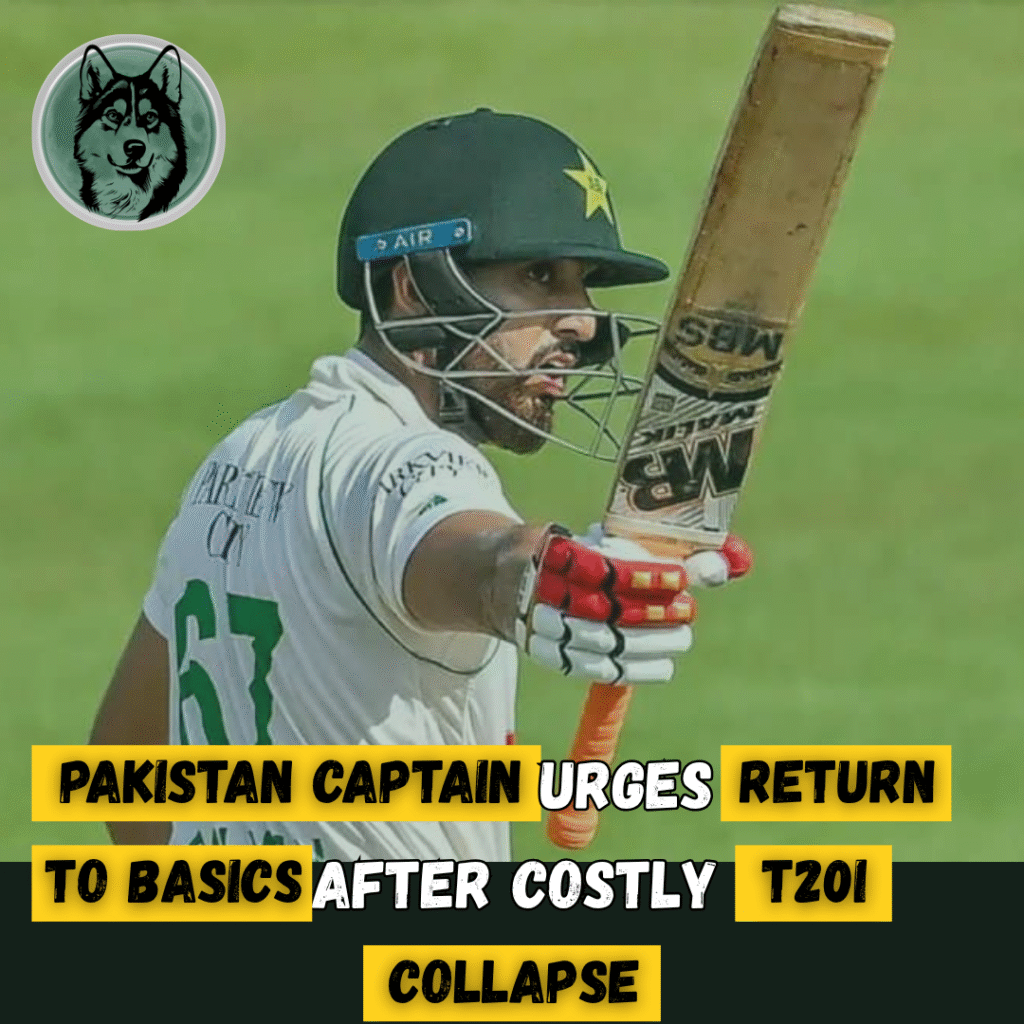
Salman Ali Agha urges players to build partnerships and avoid reckless shots after 55-run defeat.
Pakistan’s Aggressive Experiment Falters
Pakistan’s much-talked-about “intent-based” cricket revolution may already be under review after captain Salman Ali Agha expressed concern over his side’s approach following a 55-run defeat to South Africa in the first T20I at the Rawalpindi Cricket Stadium on Tuesday night.
Chasing a stiff target of 195 runs, Pakistan’s batting lineup once again failed to deliver under pressure , a familiar story in recent months. The collapse left the home side trailing 1–0 in the three-match series.
Agha Reflects on Tactical Shortcomings
Speaking during the post-match presentation, Salman Ali Agha admitted that his team needs to reassess its approach.
“We didn’t start well with the ball, but we pulled things back. With the batting, we’re losing wickets too quickly and that’s an area we need to fix fast,” he said.
Agha had previously promised to adopt modern, attacking cricket under the guidance of coach Mike Hesson, but his recent remarks suggest a rethink may be on the horizon.
From Intent to Intelligence
The captain’s comments signal a possible shift in philosophy from aggressive intent to calculated play.
“We just need to bat properly, take singles and doubles, and build partnerships. If we can do that, these chases are achievable,” Agha emphasized.
His statement hints that Pakistan may move away from the “modern” high-risk approach and instead embrace a more measured, partnership-driven style that prioritizes rotation of strike and consistency over flashy stroke play.
Lessons From the Past
Under former captains Babar Azam and Mohammad Rizwan, Pakistan was often criticized for being too cautious, yet the team delivered consistent results. Since adopting a more attacking game plan, however, the outcomes have been mixed at best.
Analysts argue that Pakistan’s batting lacks the technical foundation and mental clarity to sustain a high-risk brand of T20 cricket making Agha’s call for balance both timely and necessary.
What Lies Ahead
With two matches remaining in the series, Pakistan now faces an uphill task to bounce back. The second T20I will be held at the Gaddafi Stadium, Lahore, on October 31, where Agha’s men will aim for a quick turnaround.
Fans and experts alike will be watching closely to see whether Pakistan adjusts its approach and whether Agha’s call for patience yields better results.
One Response
Good mindset from the captain!