





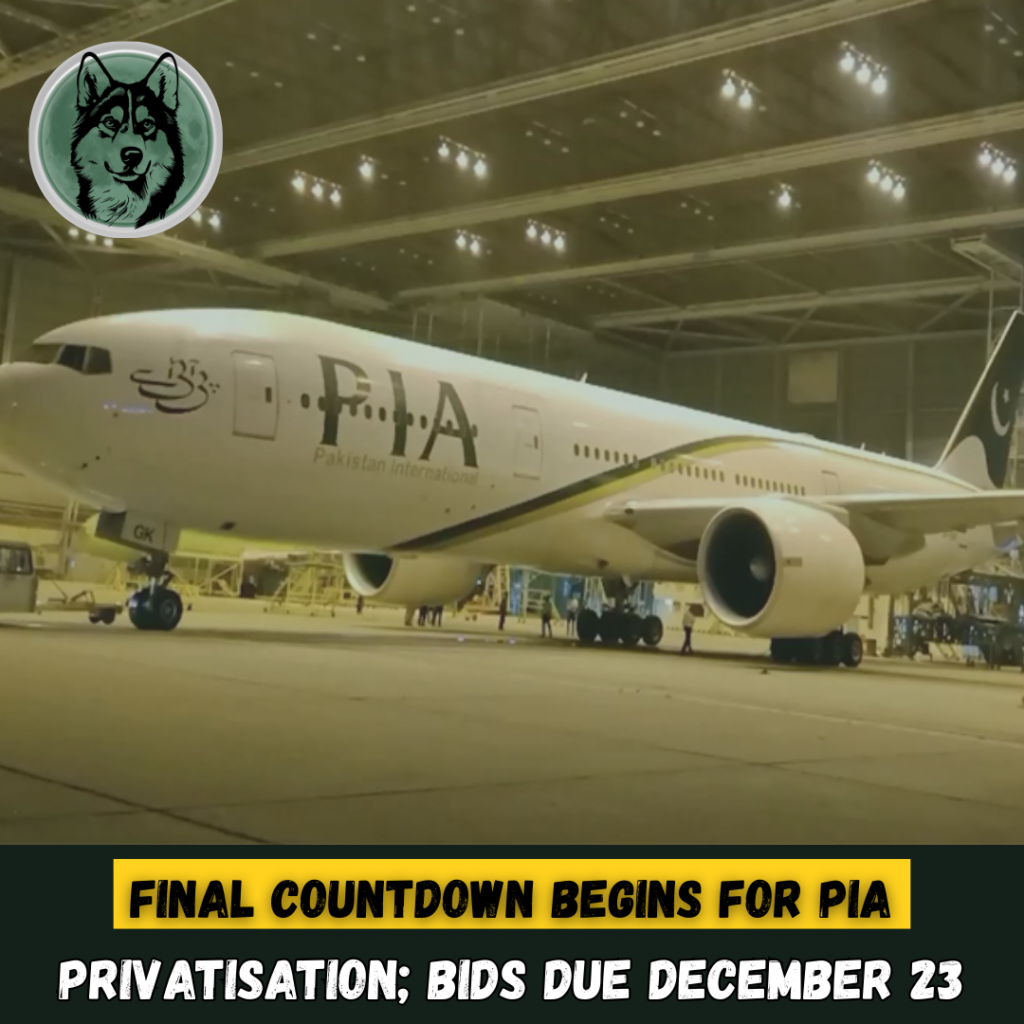
Employee strength, fleet size and route network disclosed to bidders
PIA privatisation reaches decisive stage
The long-awaited privatisation of Pakistan International Airlines (PIA) has entered its final stage, with all four shortlisted consortiums completing their due diligence after obtaining full financial, operational and human resource records from the national flag carrier.
According to officials, finance and HR experts representing the consortiums met with the PIA chief executive officer and senior management in Karachi, where comprehensive data was shared to facilitate final bid preparation.
Key disclosures to bidders
Documents provided to the consortiums reveal that PIA currently:
• Operates a fleet of 34 aircraft
• Serves more than 90 domestic and international routes
• Employs approximately 7,000 staff members
The bidders were also briefed on daily revenue figures from both domestic and international operations, offering a clearer picture of the airline’s cash flow and earning potential.
Workforce and pension clarity
Detailed information was shared regarding pilots, aircraft engineers, cabin crew, ground staff, administrative personnel and retired employees. Importantly, sources confirmed that pension liabilities of retired employees will remain with the government and will not be transferred to the acquiring consortium — a key factor likely to influence bid valuations.
This clarification removes one of the most significant financial uncertainties historically associated with PIA’s privatisation attempts.
Timeline and transparency measures
All four consortiums are scheduled to submit their final bids on December 23. Officials say the bidding process will be conducted under a fully transparent mechanism, with bids broadcast live in the media to ensure public scrutiny and credibility.
Authorities insist that transparency is central to restoring investor confidence and avoiding controversies that have derailed past privatisation efforts.
Critical analysis: A make-or-break moment
Analysts describe the current phase as a make-or-break moment for PIA’s future. While access to full records and clarity on pension liabilities have improved investor appetite, concerns remain over fleet modernisation costs, route profitability and political interference.
The success of this privatisation will not only determine the fate of the national airline but may also set the tone for future state-owned enterprise reforms under ongoing economic restructuring efforts.
What lies ahead
If concluded successfully, the privatisation could pave the way for operational efficiency, reduced fiscal burden and improved service standards. However, experts warn that post-privatisation governance and regulatory oversight will be just as critical as the sale itself.