



Health experts warn of rising respiratory issues as smog intensifies.
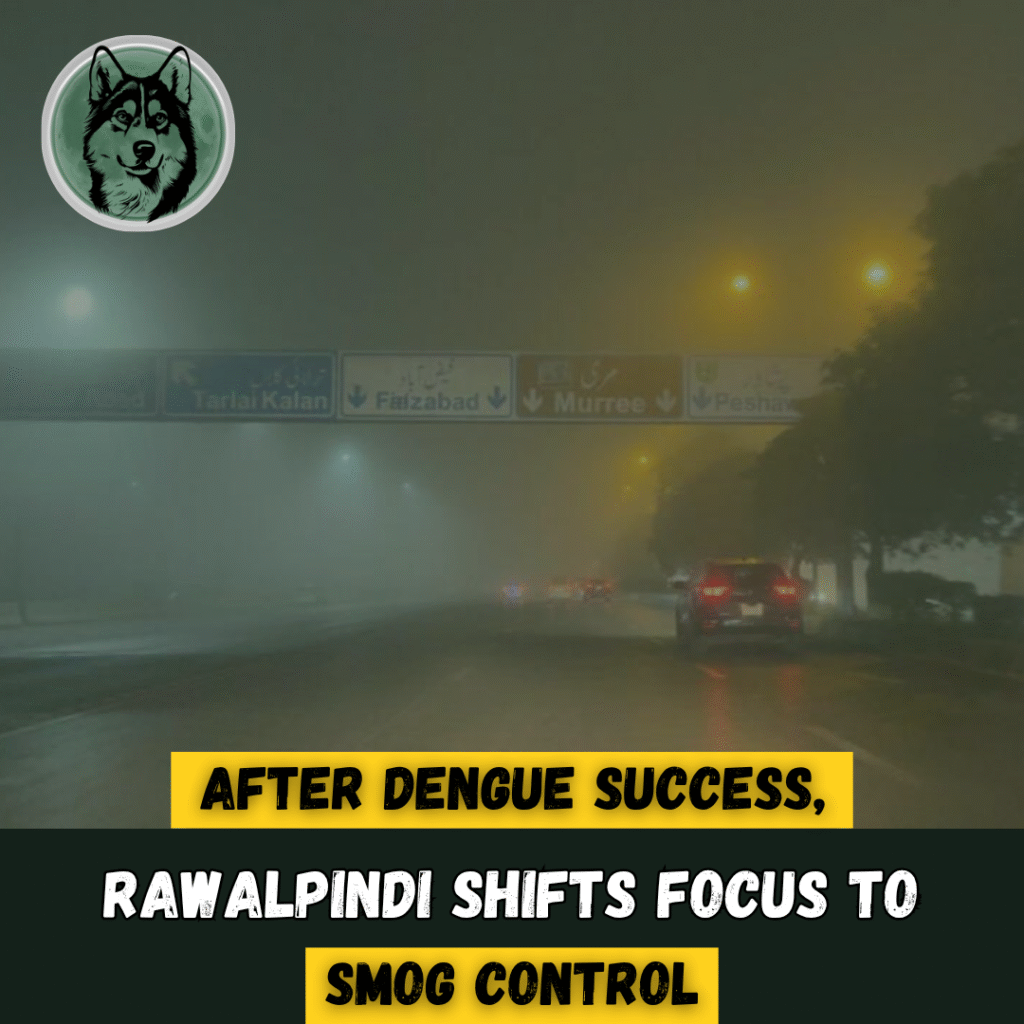
With the onset of cold winter nights, Rawalpindi’s long-running anti-dengue campaign has officially concluded, signalling the start of the city’s anti-smog season. Officials confirmed that all dengue coordination meetings have ended, along with the dedicated response mechanisms set up earlier in the year.
No Dengue Fatalities Reported This Year
For the first time in years, Rawalpindi recorded zero dengue-related deaths. Over the last 24 hours, just 13 patients were reported — all successfully treated and discharged — allowing hospitals to dismantle their dengue wards.
Throughout the year:
- 21,835 suspected dengue patients were examined
- 1,436 were confirmed cases
- 1,361 anti-dengue teams were operational
Inspection teams visited 6,333,584 households, detecting larvae in 207,006 homes.
In hotspot zones, 1,840,400 sites were surveyed, with larvae found at 28,520 locations.
Legal Action & Penalties
Authorities carried out extensive enforcement measures:
- 4,781 cases registered
- 1,927 properties sealed
- 3,700 challans issued
- Fines totalling Rs11.395 million imposed
Daily-wage workers, around 2,700 personnel, who formed the backbone of field operations are expected to have their services terminated as the season closes. Those who previously received show-cause notices are set to face salary deductions.
Eco-Friendly Shift: Ducks to Fight Dengue
In a first-of-its-kind initiative, the district plans to introduce ducks as natural predators of mosquito larvae next year.
Ducks will be encouraged in rural and peri-urban areas, where stagnant water persists during the pre-monsoon season.
Since ducks feed directly on larvae, officials expect a significant reduction in breeding even before chemical or mechanical interventions begin.
The Deputy Commissioner has instructed the Health Department to prepare a new Anti-Dengue Micro Plan 2026, to be submitted in early February.
The plan includes:
- Early spraying of graveyards
- Larvicidal treatment of stagnant water
- Promotion of duck farming in high-risk zones
Smog Season Sparks Health Concerns
As the city moves from mosquito-borne risks to atmospheric hazards, doctors warn of increased respiratory illnesses driven by smog and dust.
Speaking to a local channel, Dr Muhammad Waqas Khan said the recent spike in pollution has triggered a surge in breathing difficulties, especially in:
- Children
- Elderly individuals
- Patients with asthma or chronic lung conditions
He urged citizens to take preventive measures, including wearing masks outdoors, maintaining indoor air cleanliness, and seeking timely medical help if symptoms worsen.