




Tribal leadership with a strong message against violence
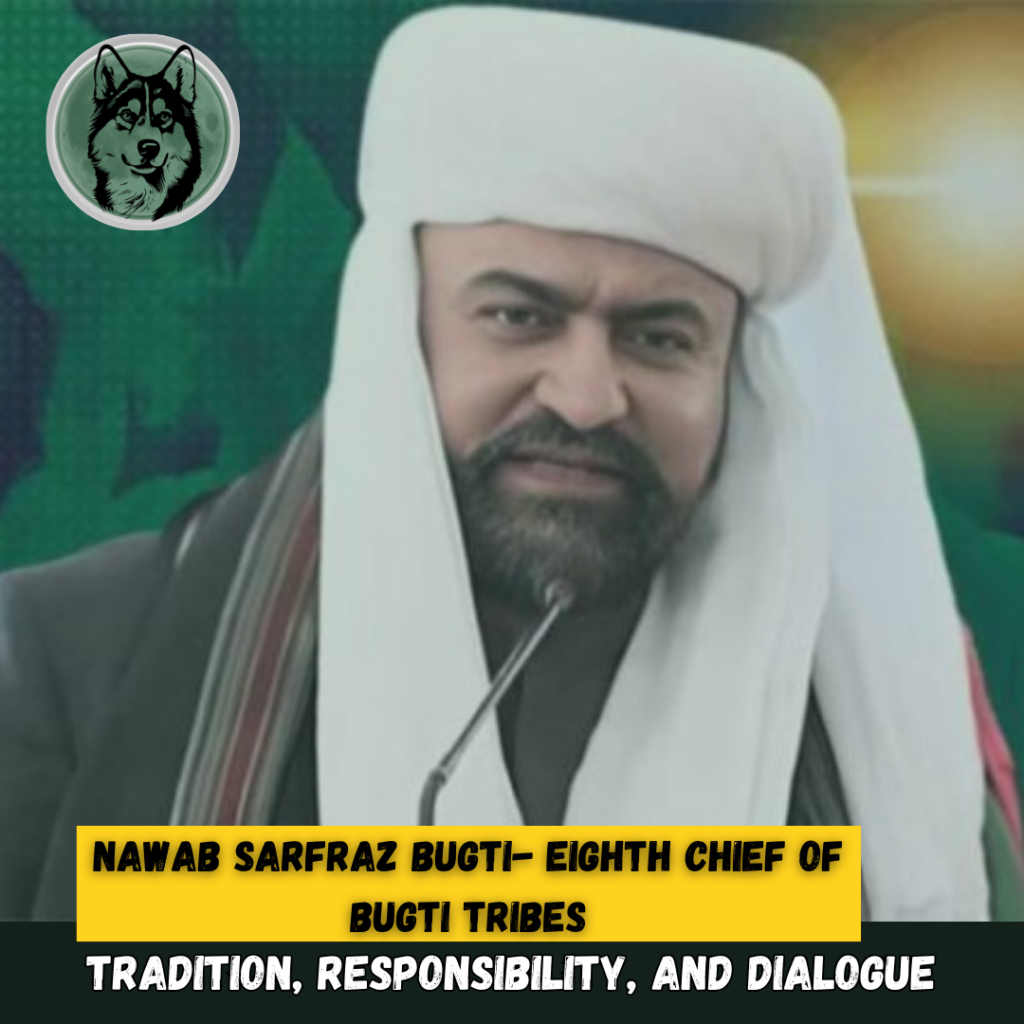
Baluchistan Chief Minister Mir Sarfraz Ahmed Bugti on Monday officially took charge as the eighth Chief of the Bugti tribes, marking a significant moment in the tribe’s long-standing leadership tradition.
The role of Chief of Bugti is regarded as the highest tribal position after Nawab Mir Aali Bugti, who leads all six Bugti clans and assumed the title of Nawab following the passing of his grandfather, Nawab Akbar Khan Bugti.
Deep Roots in Bugti Tribal History
Historical accounts show that the title of Chief of Bugti was first granted to Mir Sarfraz Bugti’s grandfather in the early 1800s, highlighting centuries of tribal governance and leadership within the Bugti community.
This legacy reflects the tribe’s continued commitment to unity, tradition, and collective responsibility.
Dastar Bandi Ceremony Held in Dera Bugti
The turban-tying (Dastar Bandi) ceremony took place in the Bekar area of Dera Bugti district. The event was attended by tribal elders, chiefs, and notable personalities from various Bugti clans.
During the ceremony, Mir Sarfraz Ahmed Bugti was formally adorned with the turban, officially confirming his elevation as Chief of the Bugti tribes.
Members of the Nawab Bugti family, including Nawabzada Zamran Saleem Akbar Bugti, were also present.
Call for Dialogue and Peace
Addressing the gathering, Mir Sarfraz Bugti urged armed Baloch groups to abandon violence and return to dialogue with the state. He stressed that the Baloch nation was being pushed toward a meaningless conflict with no positive outcome.
He emphasized that violence cannot achieve political or national goals and appealed directly to Baloch youth who have taken refuge in the mountains to reconsider their path.
“I appeal on behalf of the state and government to return and join national institutions. Otherwise, the state knows how to enforce its writ,” he said.
Turban as a Sacred Trust
Expressing gratitude to the Bugti tribes, the chief minister said the turban symbolized responsibility rather than honor.
“This turban is a trust that demands justice, courage, brotherhood, love, and sincerity. I promise to serve my people with honesty, hard work, and full dedication,” he stated.
Focus on Education and Development
Mir Sarfraz Bugti highlighted the educational backwardness of the Bugti community and reaffirmed his commitment to improving learning opportunities.
He shared that several children, including those from Bugti tribes, had already been facilitated for admission to prestigious institutions such as Lawrence College and Sadiq Public School, Bahawalpur.
Commitment to Dialogue and Reconciliation
Accepting the role with humility, he pledged round-the-clock service to his people and vowed to resolve issues faced by Bugti and neighboring tribes through dialogue, reconciliation, and peaceful solutions.
Strong Condemnation of Violence
Condemning attacks on civilians, Mir Sarfraz Bugti said violence against labourers, Punjabi workers, engineers, doctors, and women was against Baloch traditions and values.
“We are custodians of Baloch traditions and cannot allow anyone to impose ideology through force,” he said, stressing that the writ of the state must be upheld.
Formal Recognition by Tribal Elders
Earlier, tribal elders formally recognized Mir Sarfraz Bugti as Chief of the Bugti tribes. The turban was placed on his head by Nawabzada Zamran Saleem Akbar Khan Bugti, brother of Nawab Mir Aali Khan Bugti, along with chiefs from various Bugti sub-tribes.