



Prime minister demands decisive global response; stresses dialogue and diplomacy
Terrorism From Afghan Soil a Global Threat: PM Shehbaz
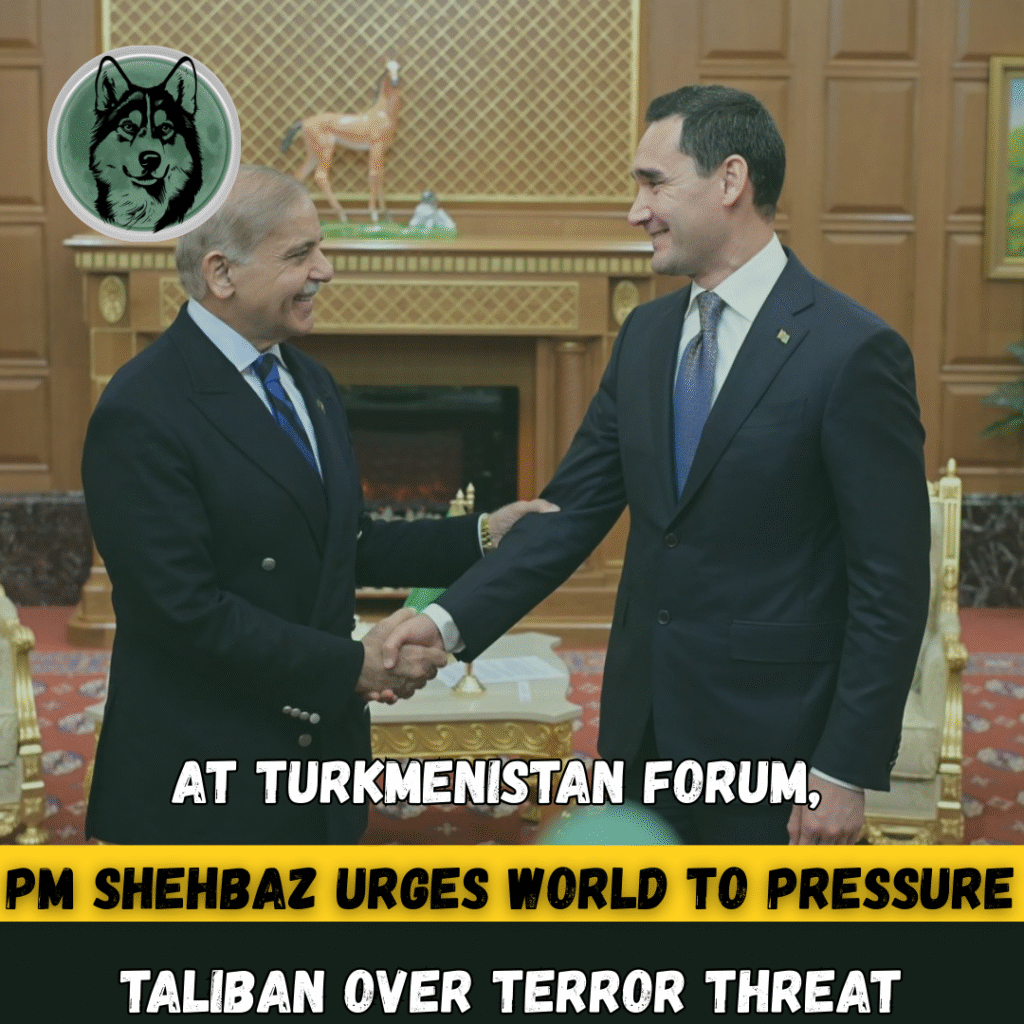
Prime Minister Shehbaz Sharif has issued a strong warning to the world, stating that terrorism emerging from Afghan territory poses a threat far beyond South Asia, and requires an immediate and coordinated international response.
He made the remarks while addressing a high-level forum in Ashgabat, commemorating the 30th anniversary of Turkmenistan’s policy of permanent neutrality.
What Sparked the Prime Minister’s Urgent Warning?
Addressing global leaders in Ashgabat, PM Shehbaz Sharif said terrorism is once again on the rise, with militant groups increasingly operating from Afghan soil.
He stressed that this resurgence is not just a security threat to Pakistan but a danger to global peace, urging world powers to recognise the scale of the challenge.
He described the situation as a “new and dangerous threat,” noting that terrorist sanctuaries across the border must be dismantled before they gain further strength.
Why Is Afghan-Based Terrorism a Global Concern?
According to the prime minister:
- Afghan territory is being used to plan, coordinate, and execute attacks, including cross-border operations
- Failure to curb these networks could destabilize the region, fuel extremism, and revive global militant movements
- Without international accountability mechanisms, extremist outfits gain an open operating environment
He called for a decisive international push to ensure the Afghan authorities meet their commitments.
What Did PM Shehbaz Demand from the International Community?
The prime minister urged world governments to:
- Pressure the Afghan Taliban regime to stop terrorism emanating from its territory
- Compel Kabul’s rulers to fulfil their international obligations
- Work collectively to prevent a new wave of global extremism
He stressed that terror groups “must be crushed” before they grow strong enough to affect global security.
Where Did Shehbaz Sharif Deliver His Message?
The prime minister delivered his address at the Permanent Neutrality Anniversary Forum in Ashgabat, Turkmenistan — an event celebrating the country’s long-standing commitment to neutrality.
He praised the hospitality, the architectural beauty of Ashgabat, and the Turkmen leadership, calling Turkmenistan a “model of peace, trust and neutrality.”
How Does Pakistan View Conflict Resolution?
PM Shehbaz reaffirmed that peaceful conflict resolution remains the backbone of Pakistan’s foreign policy.
He called for:
- Dialogue
- Diplomacy
- Mutual respect
- Multilateral cooperation
He also highlighted Pakistan’s ongoing responsibilities as a member of the UN Security Council, reaffirming its commitment to supporting global security initiatives.
Shehbaz on Middle East Crisis & Gaza
The prime minister stressed the need for:
- An immediate and lasting ceasefire in the Middle East
- Humanitarian aid to conflict-affected populations
- Continued global support for diplomatic solutions
He said Pakistan backed the Gaza peace plan, consistent with its long-standing advocacy for peaceful conflict settlement.
Is the World Ignoring Pakistan’s Warning?
Pakistan has repeatedly raised concerns about militants regrouping in Afghanistan since the fall of Kabul.
However:
- Major global powers remain focused on Ukraine, Middle East, and Indo-Pacific tensions
- Afghanistan has largely fallen off the international agenda
- The Taliban regime faces minimal external pressure
This creates a dangerous vacuum, giving militant groups operational space.
Regional Security at a Crossroads
PM Shehbaz’s remarks reflect Pakistan’s growing frustration with rising cross-border attacks.
But the warning carries broader implications:
- Instability in Afghanistan risks spilling over into Central Asia, South Asia, and even the Middle East
- Terror sanctuaries, if not dismantled, could re-link with global extremist networks
- Without collective action, the world may face a revival of transnational terrorism
Pakistan’s Diplomatic Balancing Act
While calling for pressure on the Taliban, Pakistan must also balance:
- Its regional partnerships
- Its own border security crisis
- Its role in the UN Security Council
- Expectations from neighbouring states
This is a complex environment where effective diplomacy becomes as important as military preparedness.