




Wing Commander Vikram Singh reportedly killed as India’s flagship jet fails mid-performance
Indian Tejas Fighter Jet Crashes at Dubai Air Show
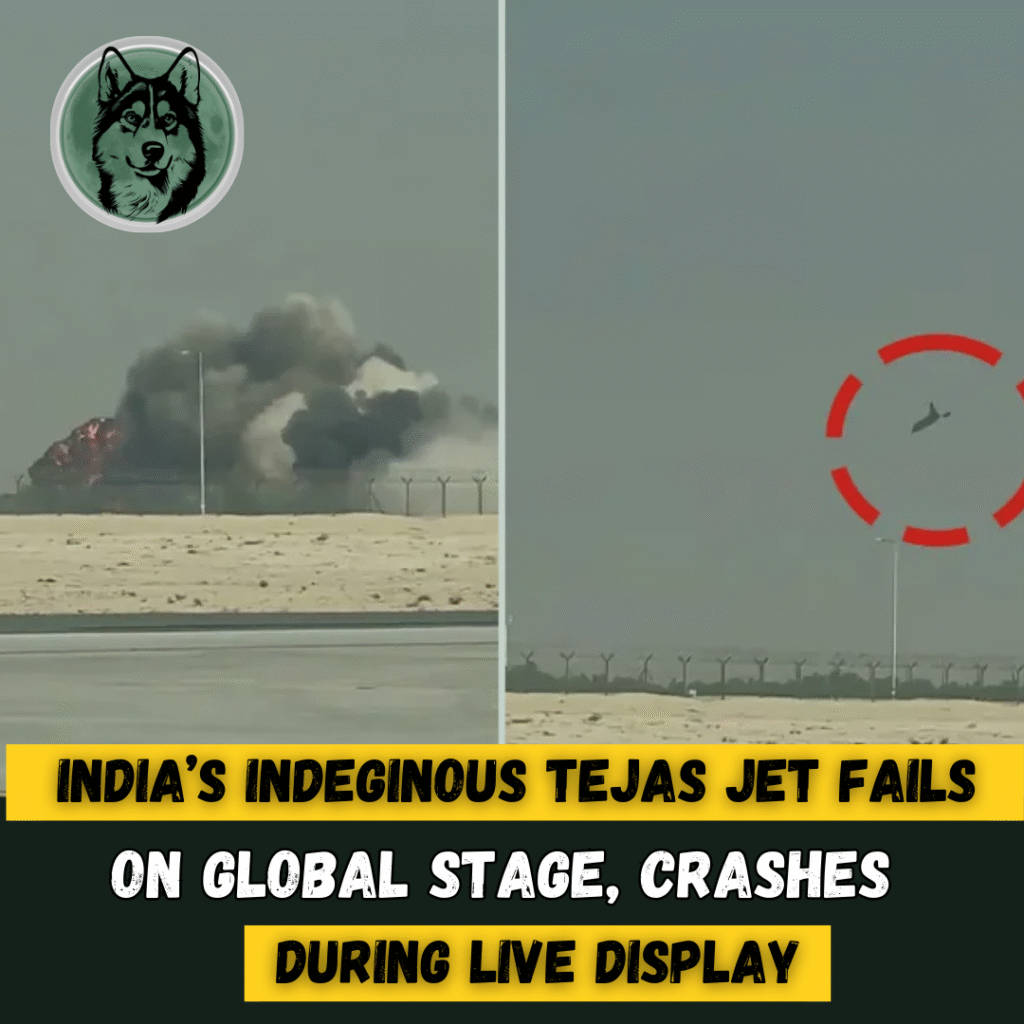
India’s much-publicised indigenous fighter jet, the HAL-built Tejas, crashed during a live aerial display at the Dubai Air Show, marking a humiliating moment for India’s defence industry.
The incident occurred around 2:10 pm local time at Al Maktoum International Airport, where thousands had gathered to witness high-performance air manoeuvres.
According to Indian media, the aircraft was piloted by Wing Commander Vikram Singh, who reportedly lost his life. The Indian Air Force later confirmed that the pilot suffered fatal injuries, adding a tragic human cost to what has become a major international embarrassment.
Catastrophic Failure During Aerial Maneuver
The Tejas was executing an aerobatic climb when it suddenly lost stability and plunged toward the ground.
Within seconds, a massive cloud of thick black smoke rose from the crash site a scene captured on multiple spectator videos that quickly went viral.
Families and aviation enthusiasts ran for safety as emergency alarms echoed across the venue, highlighting the severity of the crash.
Crowd Panic & Emergency Response
Security personnel swiftly evacuated exhibition zones, and firefighters rushed to extinguish the flames.
The Dubai Air Show organizers later confirmed that operations were temporarily suspended, as rescue teams worked to secure the site.
Arab media reported that the suspension was directly triggered by the failure of India’s Tejas jet, further deepening the embarrassment for the Indian side.
A Blow to India’s Indigenous Defence Programme
This crash marks only the second recorded Tejas accident, but its global visibility makes it far more damaging. The Tejas programme — hailed by India as proof of its defence manufacturing capabilities — has faced decades of delays, redesigns, and controversies.
Despite India promoting the latest LCA Mk1A variant as a “world-class multirole fighter,” today’s failure has raised serious questions about:
- Structural integrity
- Flight control stability
- Airworthiness certification
- Reliability of its Indigenous components
In an arena where reliability is non-negotiable, such a failure undermines India’s repeated claims of technological advancement.
What is Tejas?
The HAL Tejas is a 4.5-generation fighter aircraft intended for both the Indian Air Force and Navy.
India boasts that the Mk1A variant includes:
- AESA radar
- Electronic warfare suite
- Radar warning receiver
- Digital map generator
- Multifunction cockpit displays
But despite these claims, performance issues and system reliability concerns have long shadowed the programme.
ANALYSIS: India Faces Global Embarrassment After Tejas Failure
1. Damaged Export Prospects
India has aggressively tried to market the Tejas to foreign buyers. This crash at a global defence exhibition may severely reduce interest and confidence among potential customers.
2. Exposed Weaknesses in India’s Defence Manufacturing
The crash underscores longstanding criticism regarding HAL’s production quality, delayed development cycles, and questionable testing standards.
3. Strategic Setback in Regional Defence Competition
The incident is expected to reignite comparisons with Pakistan’s JF-17 Thunder, which has successfully participated in multiple international air shows and secured export deals.
4. Air Show Safety & Pilot Risk
The failure during a manoeuvre will draw attention to India’s pilot training, aircraft handling limitations, and the jet’s endurance during high-G aerobatics.
5. Question Marks Over Transparency
Indian authorities and HAL have yet to provide detailed explanations a pattern of silence that has characterized previous technical failures.