




Outrage erupted as a video showing traffic police officials torturing a biker went viral, highlighting abuse of power and public fear
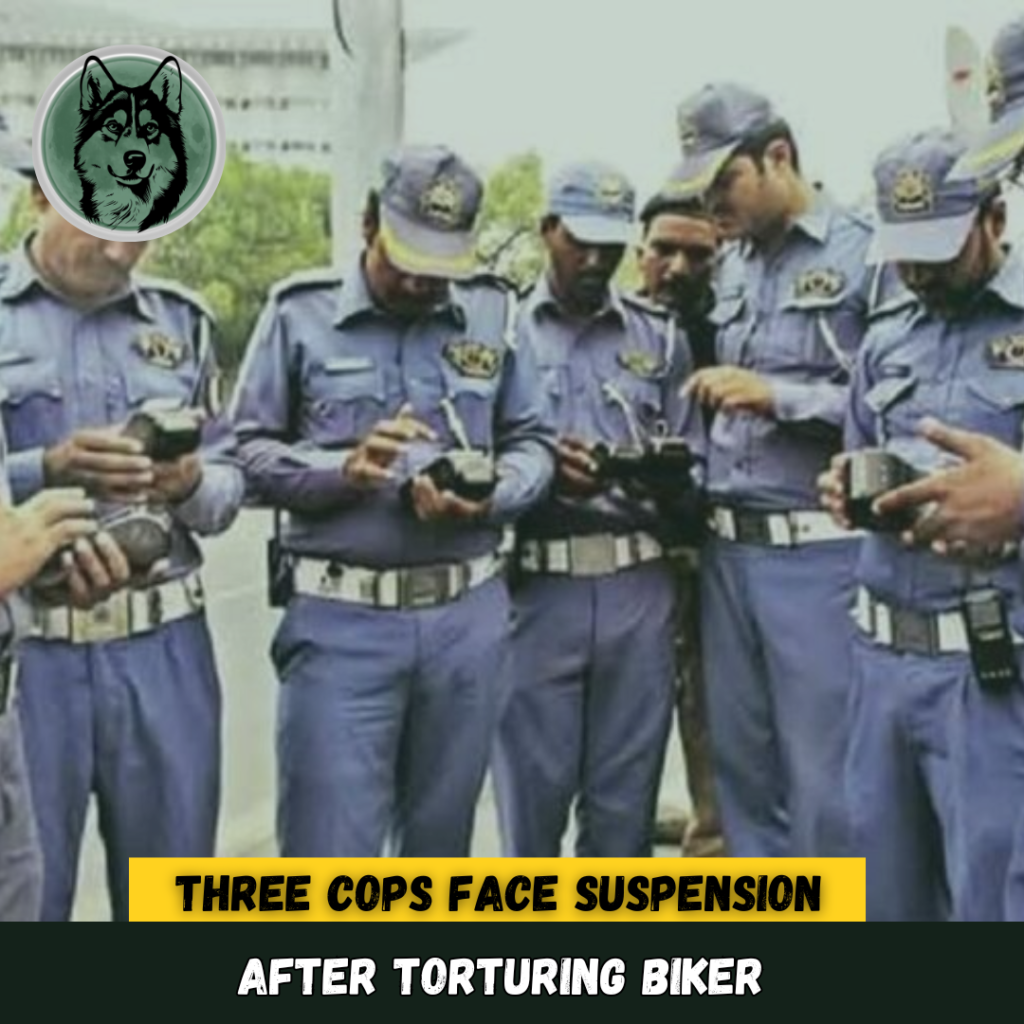
Three traffic police officials were suspended on Wednesday after a video surfaced online showing them torturing a motorcyclist at a filling station in Fort Abbas
Incident Details
The victim, Anees Khalid, approached the District Police Officer (DPO) asking for justice. He said he was on his way to work when he stopped at a filling station for fuel. Five men, including traffic officials Mukhtar Ahmed, Ehsan, and Waseem, allegedly assaulted him.
Anees claimed the officers used abusive language and threatened to hand him over to the Crime Control Department. This happened despite him paying a Rs2,000 challan for not wearing a helmet.
Traffic Police Version
Traffic police officials told Dawn that Anees initially dodged them after being issued a challan near Ramay Chowk. They chased him to the filling station, where the owner paid the challan. The officials alleged Anees misbehaved with their in-charge, Mukhtar, before escaping.
Public Outrage
Locals complained about the rude behavior of traffic police in the district. They alleged that officers often issue illegal challans to meet targets and treat those who protest harshly.
Official Response
A police spokesperson said the Bahawalnagar DPO suspended the three traffic officials. A departmental inquiry has been launched for further action.
Impersonator Case
Separately, police filed a case against Khalid Hussain for impersonating an excise official. He allegedly extorted Rs7,500 from a tractor-trolley driver in Chishtian. A viral video showed him fleeing when asked for identification. Locals said fraudsters often extort drivers, and complaints to the excise office had no effect.
Critical Analysis
This incident highlights systemic issues within local traffic enforcement. Officers abusing power not only harm citizens physically but also erode public trust in law enforcement. The viral video demonstrates how social media has become a tool for accountability.
Suspending the officials is a step forward, but without structural reforms, abusive behavior may continue. Clearer training, public oversight, and strict disciplinary measures are essential to prevent future incidents.
The impersonation case adds another layer of concern, showing how organized fraud exploits gaps in enforcement and public awareness. Together, these cases reveal the urgent need for institutional accountability in law enforcement and regulatory bodies.