




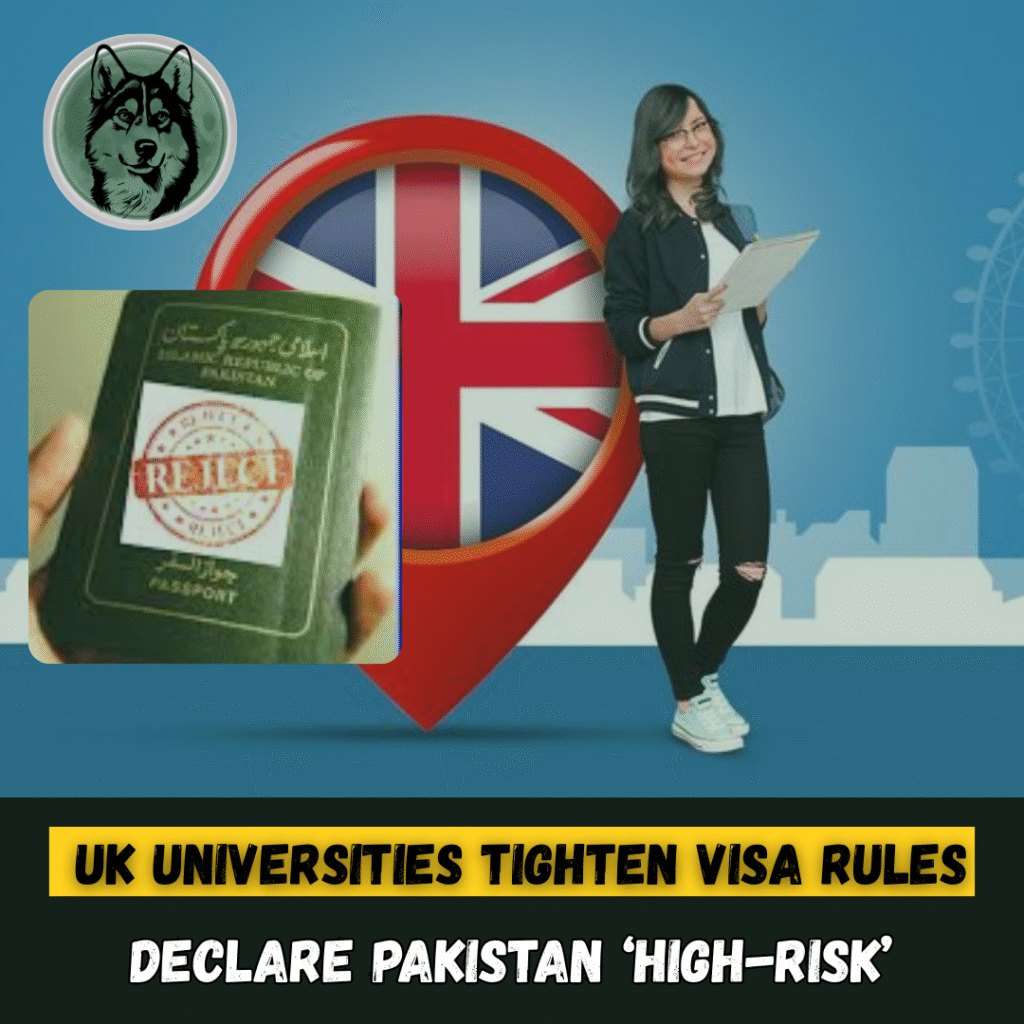
Pakistani student visa refusal rates exceed new UK limits, triggering widespread admission pauses.
UK Universities Tighten Visa Rules for Pakistani Students
Several universities across the United Kingdom have tightened or suspended admissions for students from Pakistan and Bangladesh as part of stricter immigration controls and concerns over alleged visa misuse, according to a report by the Financial Times.
At least nine higher education institutions have now categorized Pakistan and Bangladesh as “high-risk” markets for student visas. These universities have imposed strict screening procedures, paused recruitment, or halted entire programs for applicants from the two countries to protect their ability to sponsor international students under new compliance rules.
The development comes after a significant rise in asylum claims lodged by international students who previously entered the UK through study or work visa routes. British ministers have repeatedly warned that the student route “must not become a backdoor to settlement.” A regulatory overhaul in September also reduced the maximum visa refusal threshold for sponsoring universities from 10% to 5%, placing institutions under severe pressure to avoid high-risk applications.
Universities Taking Action
The University of Chester has suspended all recruitment from Pakistan until autumn 2026, citing an “unexpected rise in visa refusals.”
The University of Wolverhampton has stopped accepting undergraduate applications from Pakistan and Bangladesh.
The University of East London has completely paused Pakistani student recruitment.
Other institutions such as Sunderland, Coventry, Hertfordshire, Oxford Brookes, Glasgow Caledonian, and BPP University have also scaled back admissions through risk-based restrictions.
According to official UK Home Office figures, Pakistani and Bangladeshi student visa refusal rates currently stand at 18% and 22%, respectively—far exceeding the new 5% institutional cap. Applicants from these two countries account for nearly half of the 23,036 visa refusals recorded in the year ending September 2025.
Sector Reactions
International higher-education consultant Vincenzo Raimo described the situation as a “real dilemma” for universities that depend heavily on overseas enrolments, particularly those with lower fee structures. He warned that even a small number of problematic cases now risks pushing institutions above the refusal limit, which could jeopardise their licence to sponsor international students.
Pakistani education advisers expressed deep concern.
Maryem Abbas, founder of Lahore-based Edvance Advisors, said the decisions are “heart-breaking” for genuine students whose applications are rejected late in the process despite meeting all requirements. She linked part of the problem to weak oversight of private recruitment agents, saying the student visa channel has gradually turned into a “moneymaking business,” allowing opportunistic agents to push unprepared applicants into the system.
What This Means Going Forward
With refusal rates rising and compliance pressure tightening, the UK’s new strategy signals a broader shift toward immigration control through higher education policies. Analysts warn that additional universities may impose restrictions on Pakistani applicants if refusal trends remain high, further reducing opportunities for students seeking UK degrees.