
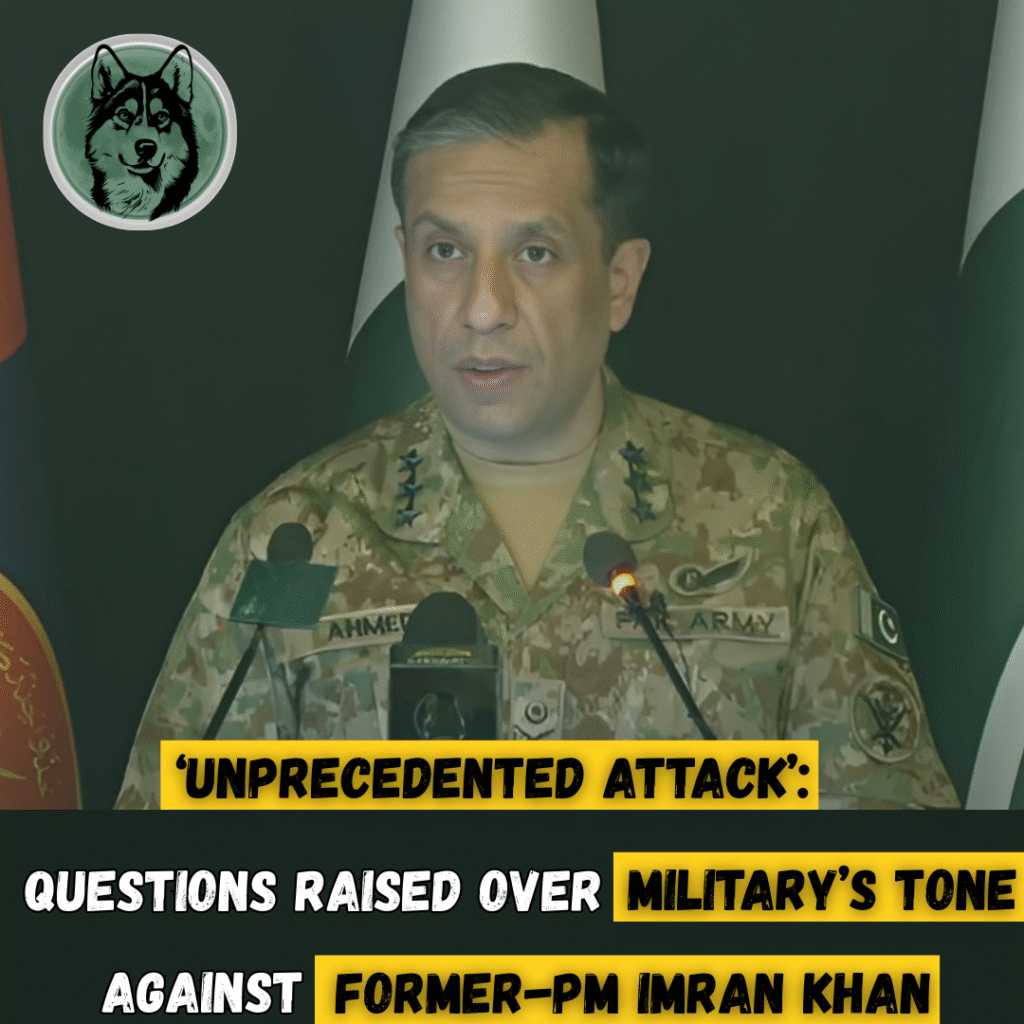
Analysts call the military’s remarks politically loaded and legally problematic.
Military’s Aggressive Briefing Triggers Political Storm
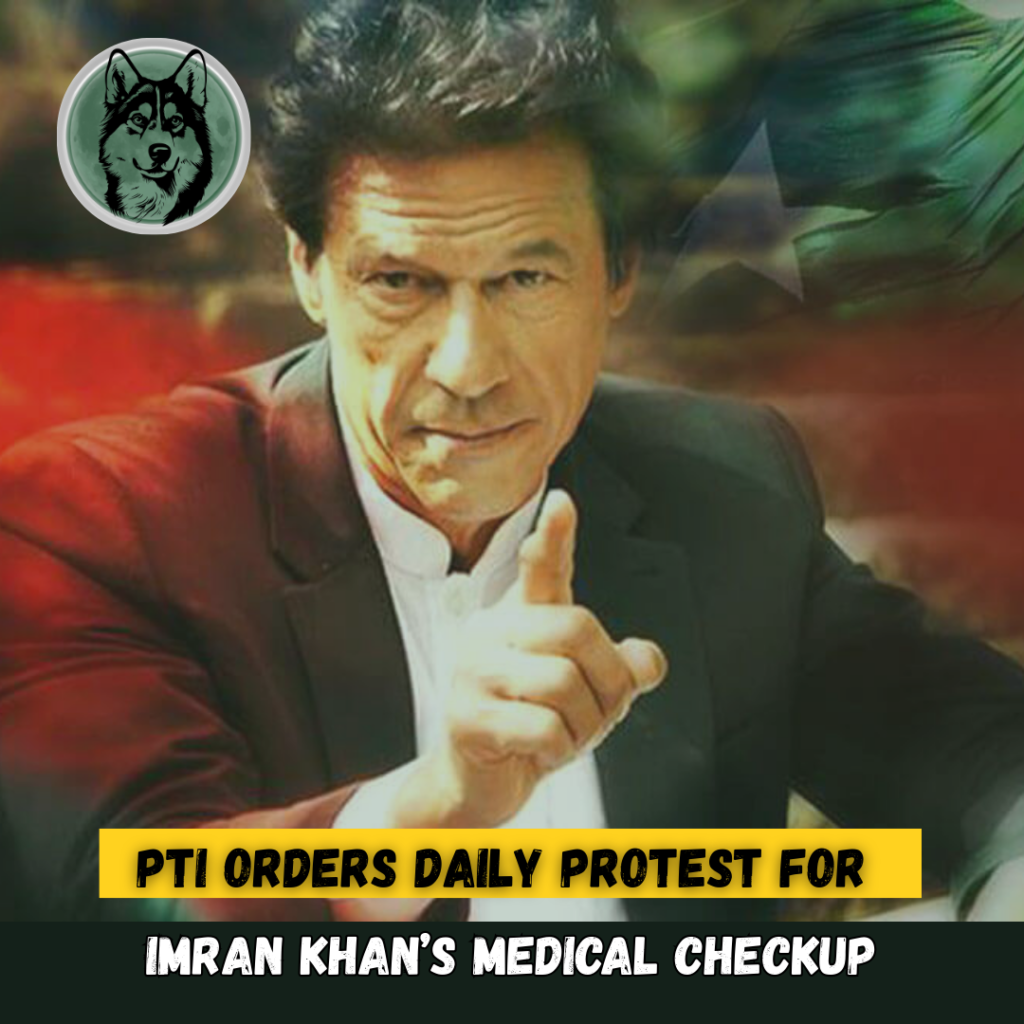
ISLAMABAD: The ISPR’s unusually harsh briefing against former prime minister Imran Khan has sparked widespread debate across political, legal, and civil society circles, with many questioning why the military has chosen such direct, personalised rhetoric at a time when the country is struggling with governance, economic crises, and public distrust in institutions.
Although the spokesperson never explicitly named Imran Khan, the pointed references left no ambiguity. Yet PTI leaders and analysts argue that the tone, timing, and focus of the briefing raise more questions than answers.
PTI’s Counter-Narrative: “Targeting a Popular Leader Won’t Erase Public Support”
PTI strongly rejected the military’s characterisation of Imran Khan as a “narcissist” or “security risk,” calling the remarks politically motivated and a continuation of efforts to delegitimise a popular civilian leader.
Party representatives say Imran Khan’s criticism of policies—especially regarding Afghanistan, governance gaps, or foreign relations—falls under constitutional rights and political expression, not anti-state activity.
Analysts Question Constitutional Boundaries
Legal experts highlight that the military’s categorical intervention in political narratives raises constitutional concerns.
They argue:
- Article 19 protects political speech unless it incites violence—something not established in the briefing.
- Article 17 ensures the right to association, meaning political parties cannot be delegitimised through media briefings.
- Pakistan’s civilian structure places elected governments—not security institutions—at the center of political decision-making.
Critics argue that such briefings risk politicising the military further, undermining public trust.
Why Now? Timing Raises Eyebrows
The press conference comes at a time when:
- Economic challenges remain unresolved
- Governance issues persist in multiple provinces
- Public demand for political stability is intensifying
- Human rights defenders and international observers already question Pakistan’s democratic space
PTI officials argue that instead of engaging in political disputes, institutions should prioritise national cohesion and constitutional boundaries.
“Imran Khan Remains the Only Civilian Leader with Mass Popular Mandate”
PTI maintains that Imran Khan continues to hold Pakistan’s largest and most organised public support base despite imprisonment and legal cases. They argue that the state’s approach—isolating him, restricting political access, and framing dissent as anti-state—reflects fear of democratic competition rather than genuine security concerns.
PTI leaders insist that genuine public representation cannot be replaced with administrative narratives.
Counterpoints to the ISPR Briefing
1. Allegations of a foreign-backed online campaign
PTI refutes claims that Indian or Afghan accounts drive its messaging, noting that:
- Most PTI online engagement originates from verified Pakistani accounts
- Public discontent cannot be attributed to external hands
- Social media criticism reflects real grievances, not foreign agendas
2. “Why single out PTI when other parties also criticised the military?”
Analysts point out:
- Multiple political parties—PPP, PML-N, JUI-F—have criticised military interference at various times
- None faced personal targeting at the intensity Imran Khan now faces
- Selective labelling undermines the principle of equal treatment
3. “Security threat” label questioned
Experts ask:
- What concrete actions justify such a designation?
- Is political disagreement equivalent to national security risk?
- Does labelling a popular leader “delusional” reduce public trust in institutions?
Institutional Overreach Concerns
Political observers note that:
- Military briefings heavily focused on politics blur the line between institutional role and political involvement
- Using state platforms to criticise an individual leader creates imbalance
- Such interventions risk undermining civilian supremacy outlined in the Constitution
They warn that narrowing political space fuels instability, not security.
WHAT happened?
ISPR issued a strongly worded briefing indirectly attacking Imran Khan, calling him a risk and criticising PTI’s political narrative.
WHY does it matter?
The tone and depth of the critique raise concerns about constitutional boundaries, institutional roles, and political neutrality.
WHERE did this unfold?
At the ISPR media briefing in Rawalpindi, with reactions emerging across political and media platforms nationwide.
HOW is PTI responding?
By rejecting the characterisations, framing the briefing as politically driven, and emphasising that Imran Khan remains Pakistan’s most popular democratic leader.