


A Painful Reflection on the National Ulema Conference
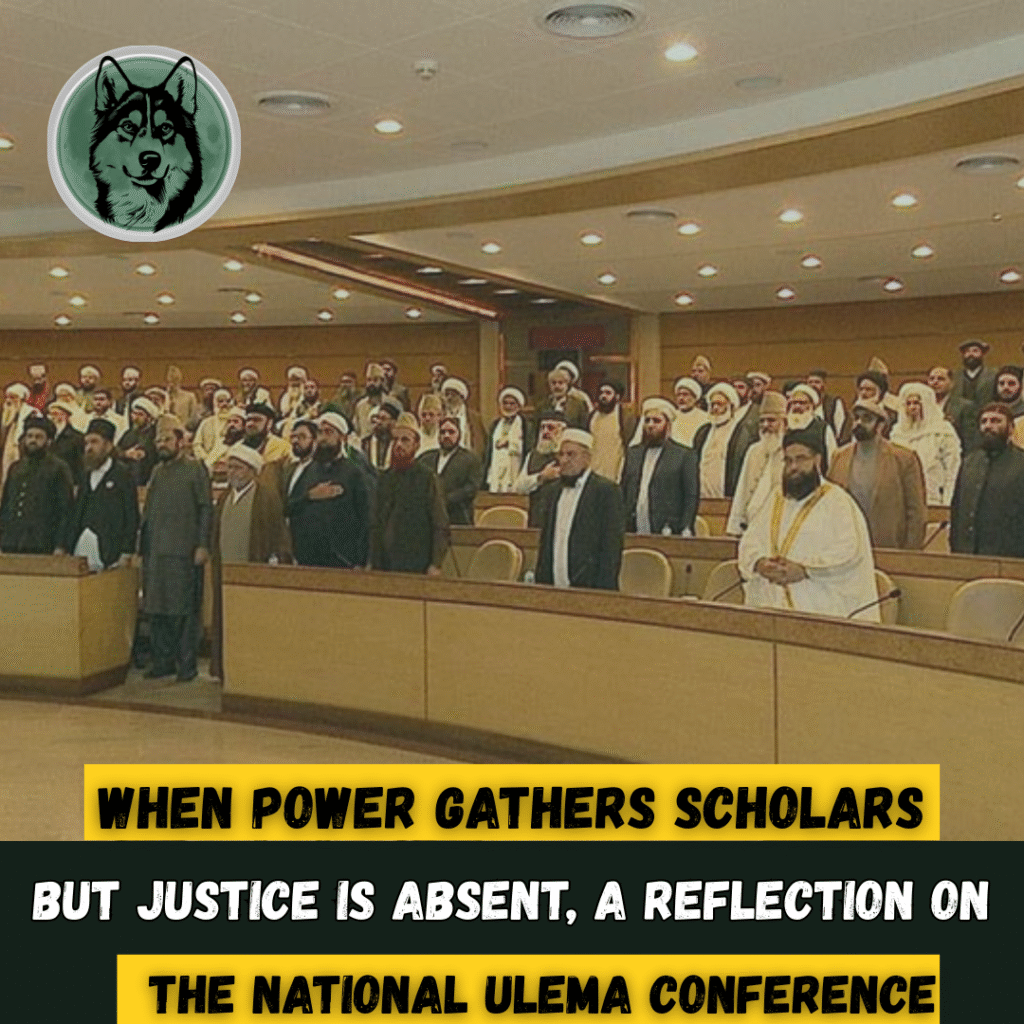
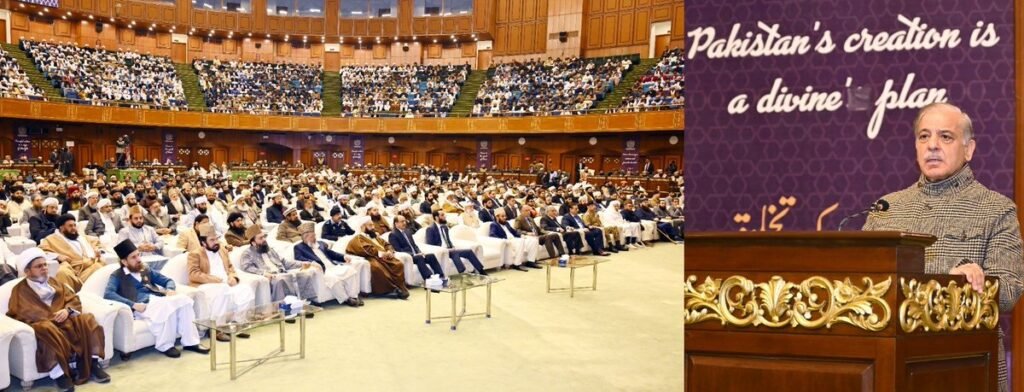
Yesterday’s National Ulema Conference was presented as a symbol of unity, harmony, and national direction. The Prime Minister and the Chief of Defence Staff shared the stage with respected religious scholars. Speeches echoed words like stability, discipline, extremism, and respect for the state.
Inside the hall, the optics were polished.
But outside that hall lives another Pakistan—
A Pakistan of batons and barricades.
Of arrests without answers.
Of fear replacing dialogue.
Of grieving mothers and silenced voices.
And that is where the real conference should have been held.
What Was Said on Stage
We heard repeated calls for:
- National unity
- Rejection of extremism
- Respect for institutions
- Stability and order
These are important words. No Muslim disputes them.
But one word was glaringly absent: Justice (عدل).
There was no serious mention of:
- Brutal crackdowns on public protests
- Excessive force against unarmed citizens
- Arrests without transparent due process
- Fear replacing accountability
Unity without justice is not unity.
It is forced silence.
What Was Ignored: The Voice of the People
Islam never taught us to ignore the صوتِ عوام — the voice of the people.
The Quran is unambiguous:
“Indeed, Allah commands justice, excellence, and giving to relatives, and forbids immorality, wrongdoing, and oppression.”
(Surah An-Nahl 16:90)
When public anger rises, Islam demands listening, not labeling.
When people protest, Islam demands accountability, not punishment.
Yet the conference spoke about the people—
not with them.
Scholars and Power: A Dangerous Closeness
History offers a painful lesson:
When scholars stand too close to power,
they slowly step away from truth.
Islamic scholarship was never meant to be a shield for authority.
It was meant to be a mirror.
Imam Abu Hanifa refused state positions.
Imam Ahmad ibn Hanbal chose prison and torture over silence.
They chose pain over convenience.
Today, when scholars justify brutality in the name of stability, people are forced to ask a frightening question:
Is this Islam—or convenience dressed as religion?
What Islam Actually Teaches Us
Islam teaches that:
- Killing one innocent life is like killing all humanity (Surah Al-Ma’idah 5:32)
- Justice must stand even against your own people (Surah An-Nisa 4:135)
- Power without accountability is corruption
Islam does not allow:
- Violence to protect incompetence
- Force to replace law
- Fear to replace justice
If minors are harmed,
if citizens are beaten,
if voices are crushed—
no speech, no stage, and no conference can wash that away.
What the World Sees
The world does not judge Islam by scripture alone.
It judges us by our conduct.
It sees societies where:
- Rule of law stands above individuals
- Police are held accountable
- Protest is a right, not a crime
- Justice is transparent
Many of these societies do not call themselves Islamic—
yet they practice justice better than many Muslim states.
That should shake us.
Because Islam came to raise human dignity,
not reduce people to silence.
Fake Faces Behind Islam
The greatest betrayal of Islam is not criticism.
It is using Islam to hide injustice.
A beard does not guarantee righteousness.
A speech does not prove faith.
A conference does not equal conscience.
When Islam is used to protect corruption, people don’t just lose faith in the state; they begin to lose faith in religion itself.
And that is a crime no conference can justify.
The Final Question
Are we Muslims who stand for justice?
Or silent spectators who clap while power speaks?
Islam does not belong to rulers.
It belongs to truth.
Until conferences speak against brutality,
until scholars stand with the oppressed,
until justice is louder than authority—
no unity is real,
no stability is permanent,
and no speech is sacred.