





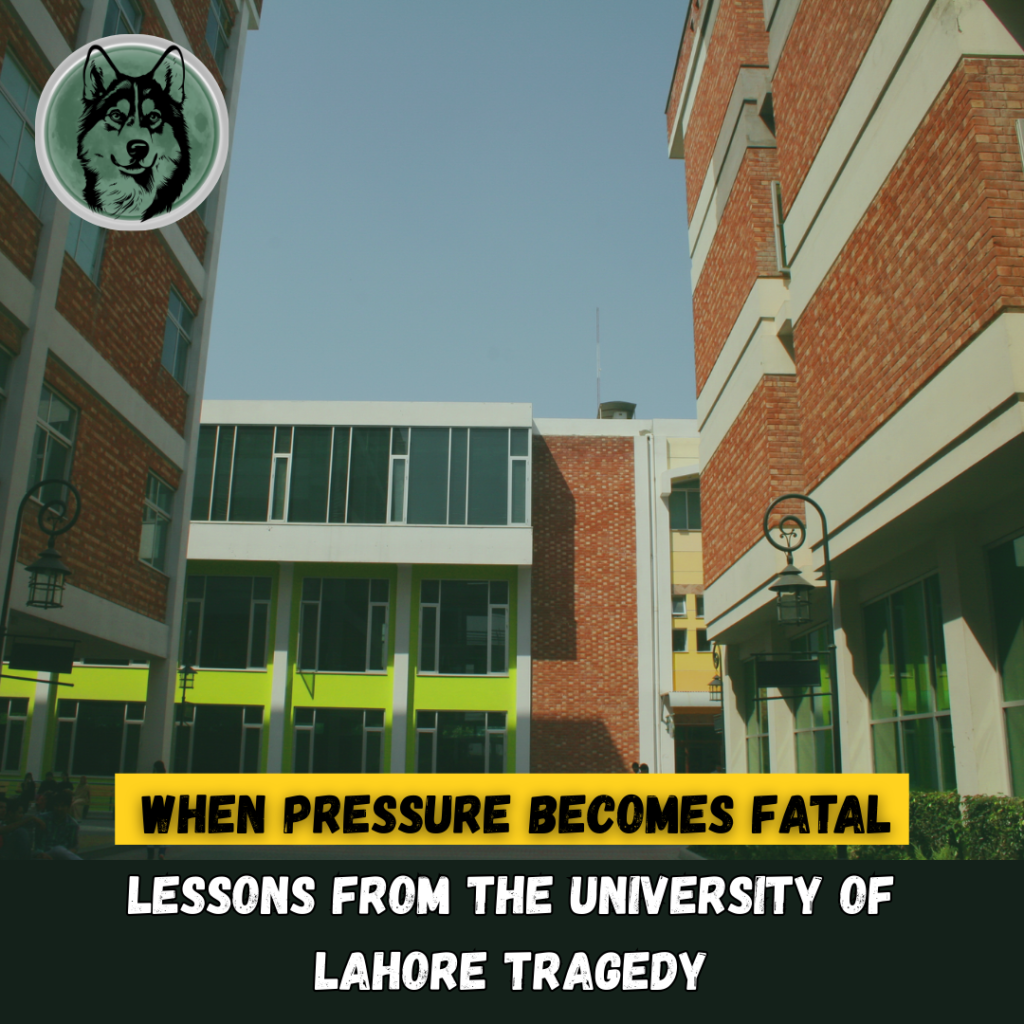
Sometimes a single tragedy exposes cracks that were long ignored. The recent loss of a young student at the University of Lahore was not just a personal catastrophe—it became a mirror for our education system, reflecting stress, silence, and systemic failure.
This incident did not end with grief. It turned into a student movement, forcing conversations that were overdue.
Why Did This Happen?
This tragedy cannot be reduced to one moment or one decision. It happened because pressure accumulated silently.
Key contributing factors:
Extreme academic pressure with little emotional support
Rigid attendance and assessment policies with harsh consequences
Fear of failure and humiliation, not just failing a subject
Lack of accessible mental-health services on campus
No safe channel for students to express distress before it’s too late
When students feel they have no voice, no flexibility, and no support, pressure turns into despair.
From Silence to Protest: Why Students Took a Stand
This loss ignited collective pain. Students protested not for chaos—but for change.
They demanded 7 concrete reforms, and for the first time, top management accepted all of them. This shows one truth clearly:
Students were not asking for favors. They were asking for dignity.
The 7 Core Demands (Accepted by Management)
These points matter because they address systemic risk, not symptoms.
Transparent & independent inquiry into the incident
Accountability where institutional pressure contributed to harm
Revision of strict attendance policies
Free and accessible mental-health & counseling services
Strengthened student welfare systems
Regular dialogue between students and leadership
Financial and moral support for affected families
These demands are not radical. They are basic safeguards.
The Bigger Lesson: What Institutions Must Learn
This incident is not about one university alone. It’s about how we define success and failure.
Lessons for educational institutions:
Academic excellence cannot come at the cost of mental health
Rules without empathy become instruments of harm
Counseling is not a luxury—it is risk prevention
Silence from students is often a warning sign, not peace
Pressure does not motivate everyone—sometimes, it breaks them
A system that produces toppers but loses lives is not successful.
What Students Should Learn
Asking for help is not weakness
One failure does not define your worth
Your life is more valuable than any semester, grade, or policy
Speaking up early can save not just you—but others too
Final Words: Turning Pain into Protection
We often say “education builds a nation.” But education without compassion destroys futures quietly.
Let this tragedy not fade into memory. Let it become a turning point—where institutions choose humanity over rigidity, and students are treated as lives, not numbers.
We are standing today because others sacrificed. But we must ensure no student ever feels that sacrifice is the only escape.
One Response