





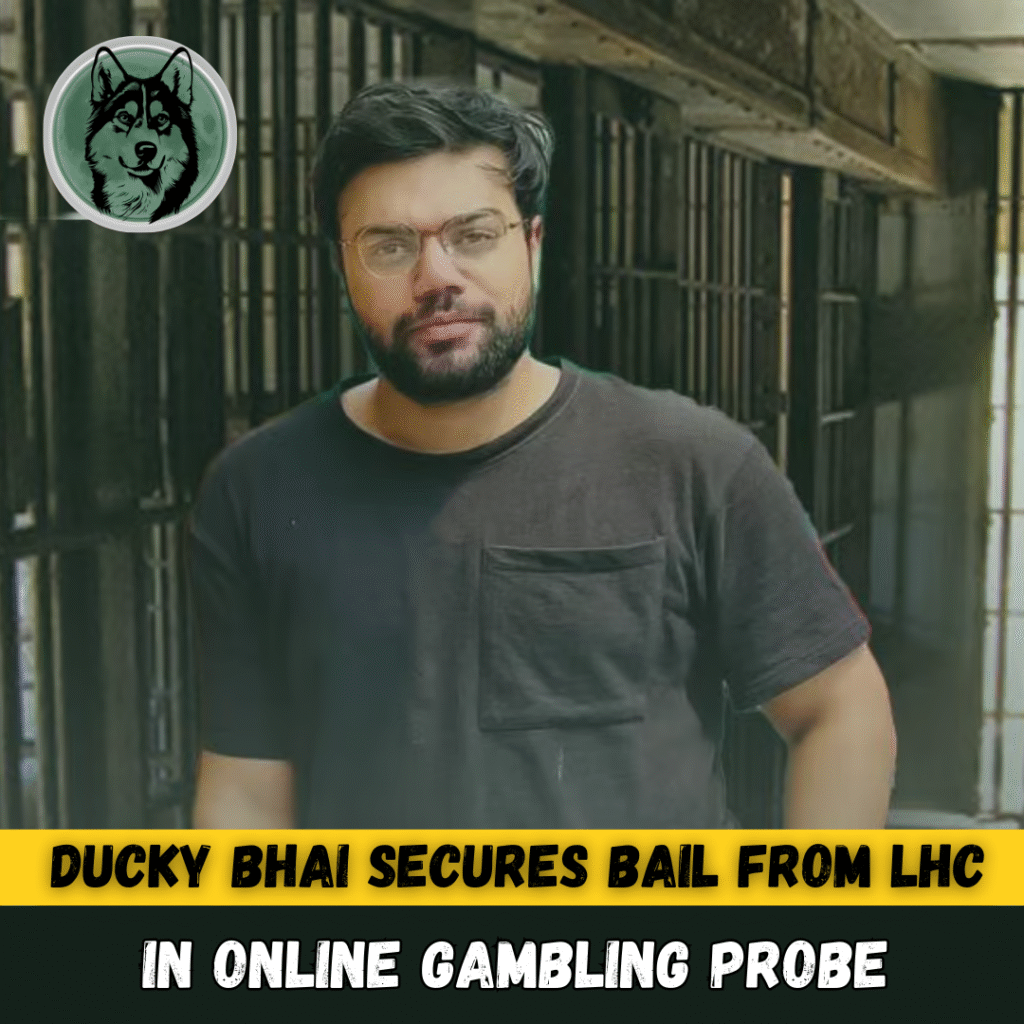
Court finds allegations insufficient for continued detention.
LHC Grants Bail to YouTuber Ducky Bhai in Gambling App Promotion Case
The Lahore High Court (LHC) has approved the post-arrest bail request of YouTuber Saad ur Rahman, widely known as Ducky Bhai, in a case accusing him of promoting online gambling mobile applications.
Justice Shehram Sarwar Chaudhry, while hearing the petition, granted bail against surety bonds worth Rs1 million. The judge noted during the proceedings that the Supreme Court has previously ruled that denying bail in such cases is considered “unusual,” signalling that continued detention was not justified under the presented allegations.
The court had earlier summoned arguments from both parties before issuing the decision.
Case Background
Ducky Bhai approached the LHC after being arrested in connection with the alleged promotion of gambling apps. His petition stated that the accusations did not merit his prolonged custody and that he had complied with investigative requirements.
The YouTuber was detained by the National Cyber Crime Investigation Agency (NCCIA) at Lahore Airport, where he was allegedly attempting to depart the country despite his name being placed on the Provisional National Identification List (PNIL).
According to Express News, immigration authorities flagged his name during departure checks and alerted NCCIA officials already investigating him on multiple charges, including digital promotion of gambling-related applications. Investigators alleged he was attempting to leave Pakistan to evade ongoing inquiries.
Legal Position
Ducky Bhai’s legal team argued that:
- He had not been convicted of any offence.
- The FIR did not justify continued incarceration.
- The evidence presented so far did not substantiate claims of criminal intent.
The court’s decision reflects judicial precedent that bail should not be denied in cases where charges are yet to be proven and where the alleged offence does not require custodial investigation.
WHY THIS MATTERS
- Sets precedent for digital influencers: Cases involving online promotion are increasingly common, and this ruling underscores the courts’ cautious approach to pre-trial detention.
- Highlights regulatory challenges: The rise of unregulated online gambling apps has put influencers under scrutiny, revealing gaps in digital policy enforcement.
- Raises questions about PNIL enforcement: The incident exposes issues in how authorities track and restrict individuals under investigation.
The case reflects the tension between rapidly growing digital content industries and Pakistan’s still-evolving cybercrime frameworks. While regulators push for stricter controls on online gambling promotion, the legal system emphasizes due process and proportionality in arrests.
The LHC’s decision suggests:
- Investigations must rely on clear, demonstrable evidence rather than assumptions of intent.
- Detentions should not be used as punitive measures before trial.
- Influencers carry responsibility for the brands and apps they endorse, but legal processes must remain balanced.
However, questions remain about digital literacy, influencer accountability, and the need for clearer laws governing online promotions.