


Officials say participation aligns with moral duty, diplomatic interests, and peacekeeping legacy
Islamabad Mulls Participation in Gaza Force
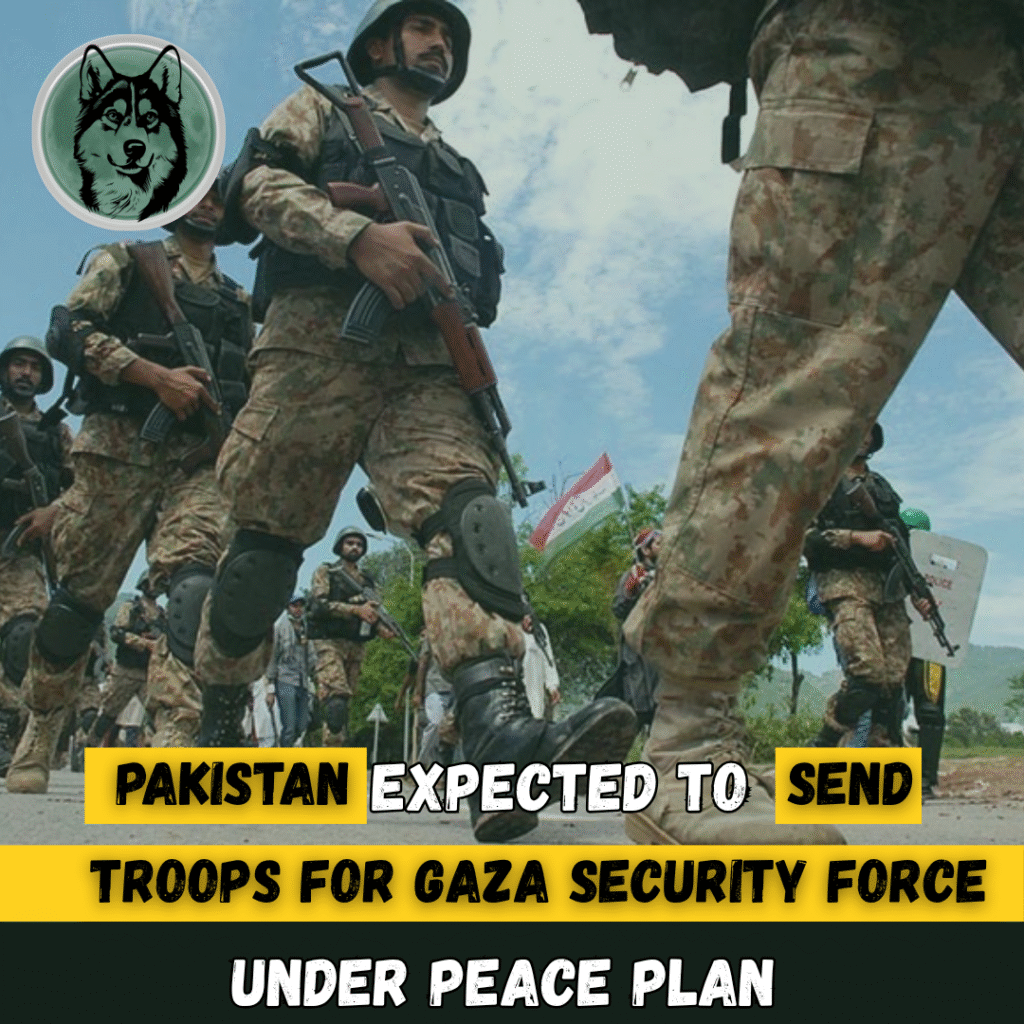
Pakistan is likely to announce its participation in the International Stabilisation Force (ISF) for Gaza soon, with government and military consultations reaching an advanced stage, officials confirmed on Tuesday.
According to senior officials familiar with the discussions, the tone of deliberations suggests a positive inclination toward joining the US-brokered Gaza Peace Agreement, which calls for a multinational force composed largely of troops from Muslim-majority nations.
The ISF’s mandate includes maintaining internal security, disarming Hamas, securing border crossings, and facilitating humanitarian relief and reconstruction under a transitional Palestinian authority.
Regional and Diplomatic Dynamics
The move comes amid a delicate diplomatic landscape, as Israel and regional states debate the composition of the stabilisation force.
While the United States has ruled out deploying its own troops, it has sought contributions from Indonesia, the UAE, Egypt, Qatar, Turkiye, Azerbaijan, and Pakistan.
However, Israeli Foreign Minister Gideon Saar has opposed Turkiye’s inclusion due to Ankara’s “hostile posture toward Israel,” while Israeli Prime Minister Benjamin Netanyahu indicated that Israel will determine which nations can operate in Gaza.
Reports from the Israeli press suggested that a proposed ISF comprising Pakistan, Indonesia, and Azerbaijan would handle internal policing, border security, and arms control within Gaza.
Field Marshal Asim Munir’s Regional Diplomacy
The discussions gained further traction amid Army Chief Field Marshal Asim Munir’s visits to Egypt and Jordan, both deeply engaged in Gaza’s post-ceasefire process.
In Cairo, Field Marshal Munir met with President Abdel Fattah al-Sisi, commending Egypt’s “tireless efforts” to end the humanitarian crisis in Gaza.
President Sisi, in turn, lauded Pakistan’s “positive and proactive contributions” on issues critical to the Muslim world.
Analysts say the Cairo meetings strongly indicate Pakistan’s potential involvement in the ISF and the US-led Civil-Military Coordination Centre tasked with monitoring the Gaza peace plan’s implementation.
In Amman, Munir met King Abdullah II and Joint Chiefs Chairman Maj Gen Yousef Al-Huneiti, who acknowledged Pakistan’s commitment to regional peace and security, according to ISPR.
Moral, Strategic, and Diplomatic Considerations
Officials in Islamabad argue that Pakistan’s potential deployment stems from both moral responsibility and strategic logic.
“We were among the original backers of the Gaza peace architecture,” said a senior official.
“To step aside now would mean abandoning an initiative we helped shape — it’s a moral as well as political obligation.”
Pakistan’s strong peacekeeping legacy also bolsters the argument. Having contributed over 200,000 troops to 40 UN missions, Pakistan is one of the largest peacekeeping contributors in the world, a record officials say gives Islamabad credibility and operational capability to handle volatile post-conflict zones like Gaza.
Potential Benefits and Risks
Beyond moral and operational grounds, Islamabad sees foreign policy advantages in joining the stabilisation mission.
Officials believe participation could strengthen ties with Washington, which have been gradually improving since President Donald Trump’s return to office.
“This could open avenues for economic cooperation, defence support, and regional influence,” one diplomat noted.
However, challenges persist.
Gaza remains a volatile conflict zone, and there is concern about domestic backlash in Pakistan, where public sentiment is overwhelmingly sympathetic to the Palestinian cause.
Some fear the mission could be perceived as aligned with Israeli or US interests, complicating public acceptance.
“It’s a difficult but defining choice,” said another official, underscoring the balancing act between moral support for Palestine and participation in a US-backed initiative.