



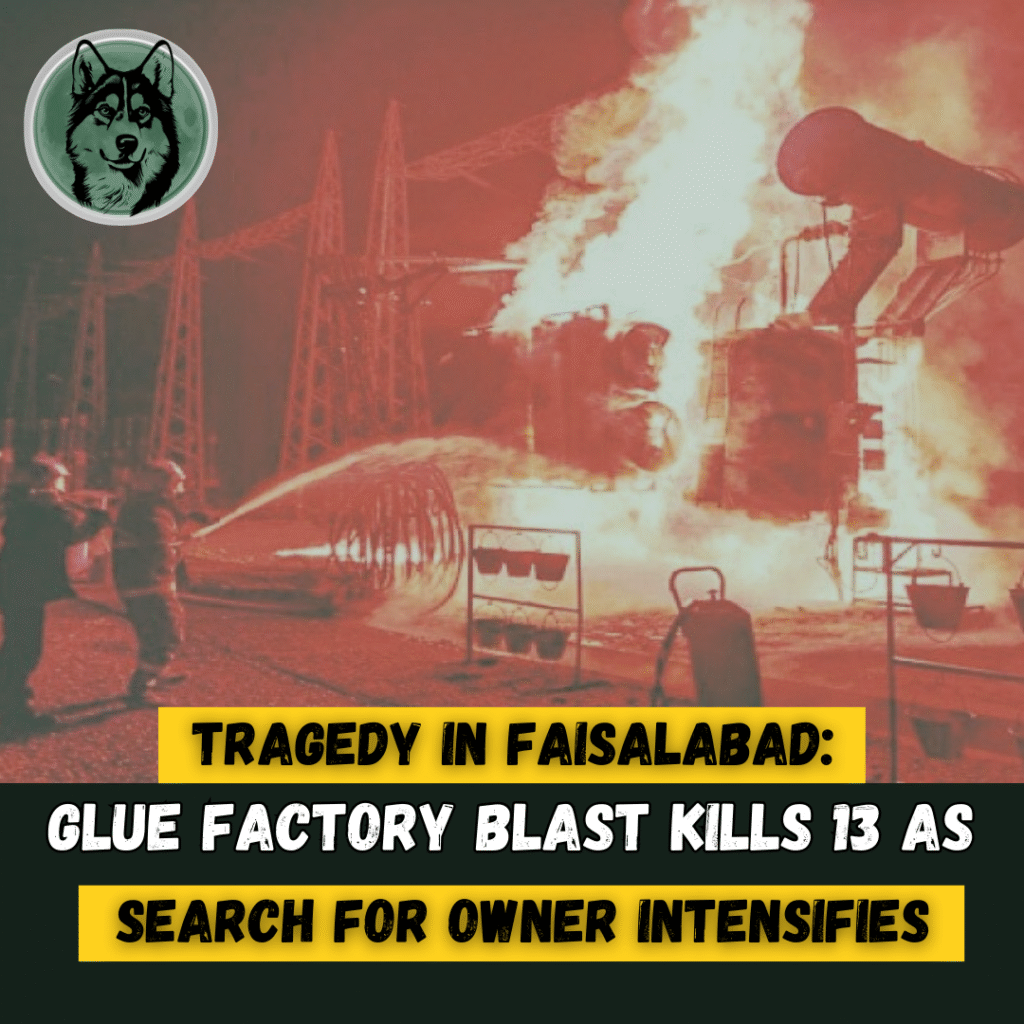
Rescue teams battle chemicals and flames as officials launch investigation into the fatal explosion.
Faisalabad Factory Blast Leaves 13 Dead in Devastating Industrial Tragedy
A powerful boiler explosion at a glue-manufacturing factory in Faisalabad’s Malikpur Chemical Factory area has left 13 people dead, including children and women, in one of the deadliest industrial accidents recorded in the city in recent years.
Rescue officials confirmed that the blast ignited a fire inside the factory, causing widespread destruction and plunging the nearby community into shock and grief.
Children and Women Among the Victims
Among the dead were at least four children and two women, including a young girl whose body was recovered from under the debris.
Several other residents sustained injuries as the force of the explosion shook the neighbouring settlement, sending panic throughout the tightly packed lanes.
Witnesses reported scenes of chaos as families rushed out of their homes, unsure of what had happened as smoke and dust filled the air.
Surrounding Houses Suffer Extensive Damage
Rescue authorities revealed that 10 houses surrounding the factory were significantly damaged.
Shattered windows, cracked walls, collapsed roofs, and scattered debris painted a picture of destruction rarely seen in the area.
Residents described the shockwave as “earthquake-like,” with some homes left unlivable. The dense construction of residential and industrial structures worsened the impact.
Rescue Operations Face Chemical Hazards
Firefighters faced immense challenges as chemicals inside the factory fueled the blaze.
A total of 15 fire tankers were deployed to control the fire, with teams working tirelessly amid dangerous fumes and unstable structures.
Emergency crews struggled to navigate the congested area, where narrow streets and damaged houses slowed down rescue and evacuation efforts.
High-Risk Industrial Zone: A Disaster Waiting to Happen
Deputy Commissioner Nadeem Nasir told the media that the factory had been operating for 25 years, during which time residential neighbourhoods gradually expanded around it.
He noted that around 100 industrial units now operate in this settlement alone—creating a densely packed cluster of homes and factories with limited safety monitoring and virtually no urban planning.
The blast has reignited questions about Faisalabad’s unregulated industrial pockets and the threat they pose to public safety.
Authorities Launch Search for Factory Owner
DC Nasir confirmed that law enforcement teams have been dispatched to arrest the factory owner, who is currently missing.
Initial reports suggest the explosion originated from the factory’s boiler system, but officials caution that a comprehensive investigation is underway to determine negligence, equipment failures, or safety violations.
Rescue teams continue to work in the area as the fire-damaged building remains unstable and nearby homes require inspection for structural integrity.
Why This Happened: A Critical Breakdown
- Unregulated industrial-residential mix: Old factories surrounded by new housing increase disaster risks.
- Lack of safety oversight: Boiler maintenance, chemical storage, and structural checks are often ignored.
- Aging infrastructure: Most factories in these settlements were built decades ago with outdated systems.
- Negligence & weak enforcement: Industrial bylaws are rarely implemented in congested neighbourhoods.
- High-density construction: Narrow lanes and packed buildings amplify the impact of explosions.
How This Could Affect Pakistan
- Pressure on provincial authorities to regulate small and medium factories.
- Renewed demand for industrial zoning reforms to separate factories from residential areas.
- Increased scrutiny of boiler safety certifications nationwide.
- Possible criminal cases against factory owners, prompting calls for stricter punishments.
- Highlighting risks to millions living near informal industrial clusters in cities like Karachi, Lahore, Sialkot, and Faisalabad.
This tragedy underscores the urgent need for Pakistan to overhaul its industrial safety standards before more lives are lost.