


Officials say psychological impact on Afghan Taliban has reduced attacks inside Pakistan.
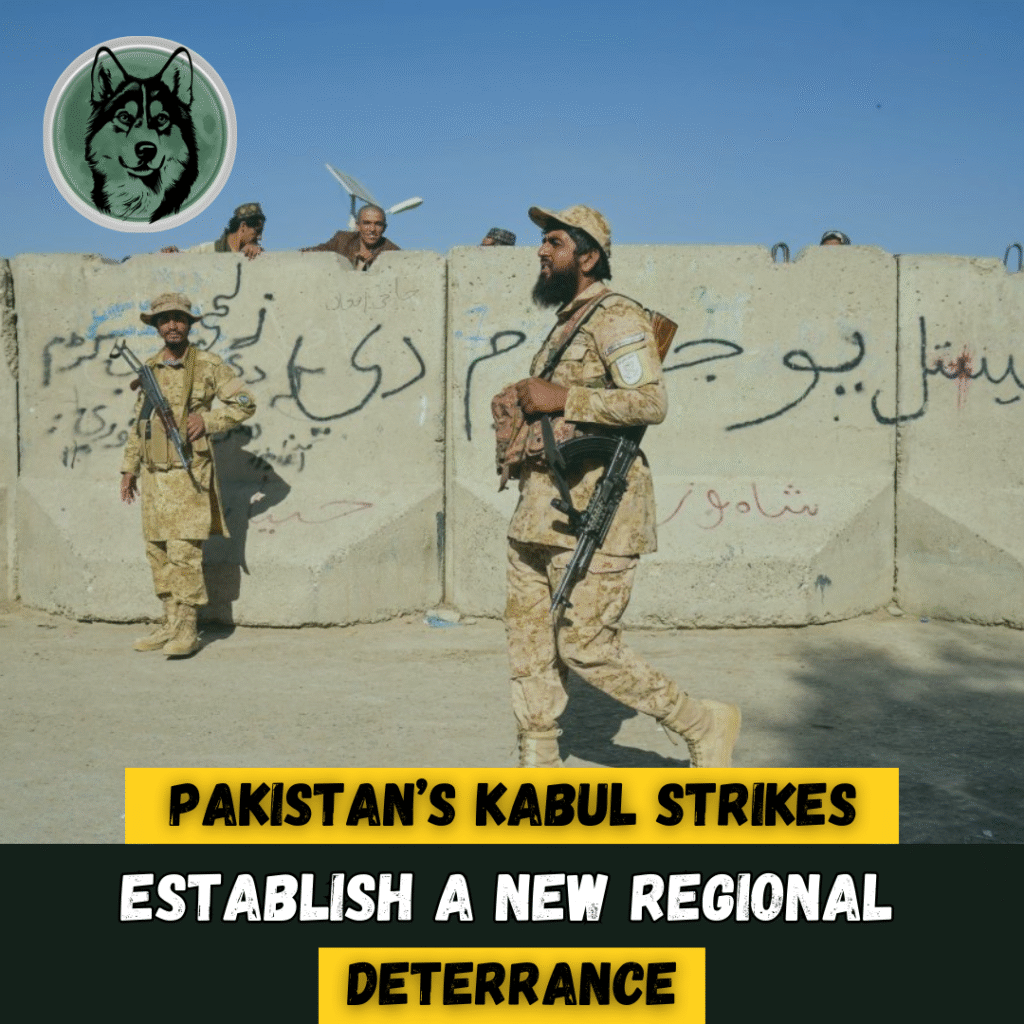
Pakistan’s Kabul Strikes Create ‘New Deterrence’
ISLAMABAD: Pakistan’s retaliatory airstrikes in Kabul last month, targeting senior commanders of the outlawed Tehreek-e-Taliban Pakistan (TTP), have triggered a significant shift in the region’s security environment, according to senior officials familiar with the assessment.
The operation, conducted in the heart of Kabul, marked Pakistan’s most assertive counterterrorism action since the Taliban reclaimed power in August 2021. Officials say the strikes carried a clear message: Islamabad will no longer confine its response to Pakistani territory when confronted with cross-border terrorism.
The targets included high-value militants and facilitators responsible for coordinating recent attacks in Islamabad and Khyber Pakhtunkhwa.
‘They Now Understand Pakistan Will Chase Them Anywhere’
Officials confirm that the strikes produced a “psychological impact” within Afghan Taliban leadership circles.
“Since the Kabul operation, there is a visible shift,” one official said. “They now understand Pakistan will chase the TTP or any hostile group anywhere — even inside Kabul.”
According to sources, this shift has already altered the Taliban’s conduct. After a recent suicide bombing outside Islamabad’s judicial complex, Afghan Taliban intermediaries privately reached out to Pakistan to request de-escalation, insisting they were not responsible for the attack.
“This has never happened before,” the official said. “Previously, they would dismiss concerns or deflect blame. This time, they were visibly worried about retaliation.”
New Rules of Engagement
The Kabul strikes have effectively changed Pakistan’s operating framework. Islamabad now sees cross-border action as a legitimate and necessary tool against groups using Afghan soil to plan attacks.
“Pakistan’s red line is simple,” a senior source explained.
“If there is another attack from Afghan soil, we will respond immediately—without waiting for diplomatic cycles.”
Officials also noted that Afghanistan’s rulers now fear that Pakistan has both the capability and willingness to hit targets deep inside the capital.
Reduction in Attacks and TTP Disruption
Security assessments indicate that the Kabul strikes forced several TTP factions into defensive mode, disrupted communication networks, and limited their capacity to launch follow-up attacks.
While the threat is not eliminated, authorities report a noticeable reduction in terrorist incidents inside Pakistan since the operation.
International Reaction: Minimal Diplomatic Cost
Officials dismissed concerns over international backlash, noting:
- many senior Taliban leaders remain under UN sanctions,
- Western countries are increasingly frustrated with Kabul’s inability to curb terror groups,
- the global environment is more permissible for counterterror operations against non-state actors.
“No country wants to defend the TTP,” an official said. “And no one is willing to endorse the Taliban’s inaction.”
Clear Strategic Message
For Islamabad, the Kabul strikes were not an isolated response but part of a new, assertive counterterrorism doctrine.
“The message is unmistakable,” a senior official said.
“If the Taliban do not act, Pakistan will.”
WHY THIS DEVELOPMENT IS IMPORTANT
- Redefines Pakistan’s security posture: A shift from defensive to proactive counterterrorism.
- Creates deterrence: Kabul now fears direct consequences for failing to restrain TTP.
- Pressures Taliban-TTP relationship: Forces the Afghan Taliban to reconsider longstanding ties.
- Reduces terror incidents: Early signs show operational disruption inside TTP ranks.
- Alters regional calculations: Signals that Pakistan will no longer absorb attacks without retaliation.
1. Strategic Maturity
The deep-strike approach signals Pakistan’s willingness to enforce its security red lines beyond borders—a major policy departure.
2. Taliban’s Dilemma
Kabul’s rulers now face internal pressure:
- distancing themselves from TTP risks internal fractures,
- supporting TTP risks provoking Pakistan and global isolation.
3. Risk Factor
While deterrence has increased, there is always a possibility of escalation if cross-border terrorism continues.
4. Impact on Regional Stability
Pakistan’s posture may compel Afghanistan to clamp down on transnational jihadist networks, potentially benefiting the wider region.