

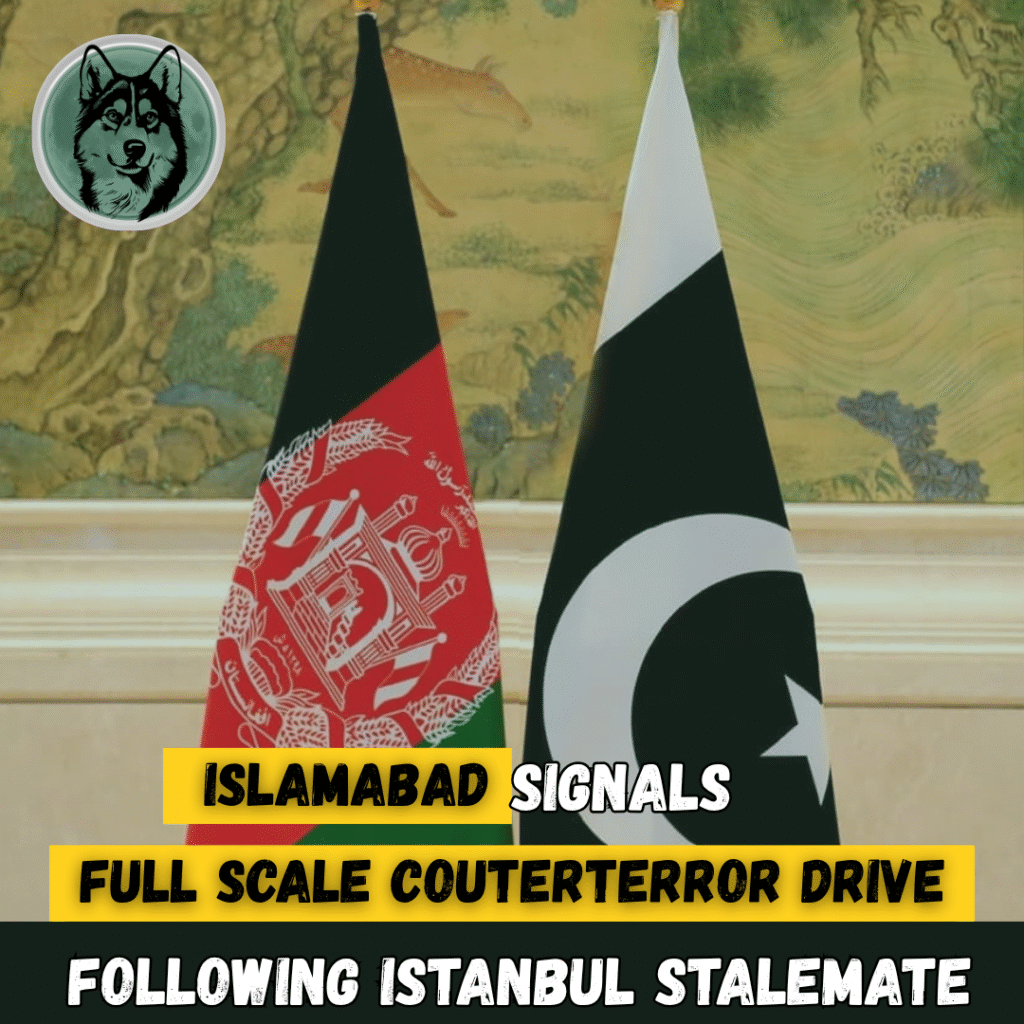
After four years of losses, Pakistan signals end of restraint, blames Taliban’s “war economy.”
Talks End Without Progress
The latest round of negotiations between Pakistan and Afghanistan’s Taliban-led government in Istanbul has concluded without agreement, with Islamabad declaring its intention to launch “full-scale action” against terrorist networks and their supporters.
Federal Information Minister Attaullah Tarar confirmed the failure of the four-day dialogue, stating that the Afghan delegation “refused to offer actionable assurances” despite being presented with “concrete and verifiable evidence” of anti-Pakistan groups operating from Afghan territory.
Focus of the Discussions
The talks, mediated by Qatar and Turkey, centered on Pakistan’s long-standing demand that Afghan soil not be used to launch attacks against it. Officials said the Pakistani delegation presented evidence linking Indian-backed terrorist organizations such as Fitna-ul-Khawarij (TTP) and Fitna-ul-Hindustan (BLA) to cross-border violence.
Despite acknowledgment of the documents by mediators, Pakistan said the Afghan representatives “chose evasion over action.” Tarar added that the delegation “avoided committing to any mechanism of verification,” effectively derailing the peace initiative.
Accusations of Evasion and Blame
Information Minister Tarar accused the Afghan Taliban of deliberately stalling progress.
“Our efforts proved futile due to their continued support of anti-Pakistan terrorists,” he said.
He further alleged that the Kabul regime’s stance reflected its dependence on a “war economy,” which benefits from instability. “The Taliban regime is not representative of the Afghan people and seeks to drag them into endless conflict,” Tarar asserted.
Pakistan’s Patience Runs Out
Defense Minister Khawaja Asif echoed Tarar’s frustration, warning that Islamabad would no longer tolerate cross-border aggression.
“If Pakistan even looks at it, it will gouge out its eyes,” he said, underscoring the government’s hardened stance.
Asif dismissed the idea of further negotiations with the banned TTP, arguing that only decisive military measures can restore peace.
Ceasefire and Mediation Background
The Istanbul discussions followed a temporary ceasefire reached in Doha on October 19, aimed at creating a framework for sustainable peace. Sources revealed that the Afghan delegation repeatedly shifted its position under instructions from Kabul, delaying any concrete outcomes.
Security officials said Pakistan’s demands including the dismantling of militant sanctuaries and verifiable non-aggression pledges were “reasonable and mutually beneficial.” Both Qatar and Turkey reportedly supported Pakistan’s position during mediation efforts.
Cross-Border Clashes Escalate
Tensions between the two neighbors have been escalating since early October. On October 12, Taliban fighters and India-backed TTP militants launched an unprovoked attack on Pakistani border posts.
In retaliation, Pakistan’s Armed Forces carried out precision strikes inside Afghanistan’s Kandahar, Kabul, and border regions near North and South Waziristan.
According to the Inter-Services Public Relations (ISPR), over 200 militants were killed while 23 Pakistani soldiers embraced martyrdom.
Pakistan Thanks Mediators, But Signals Tougher Response
Despite the collapse of the Istanbul round, Pakistan expressed gratitude to Turkey and Qatar for their mediation and “sincere efforts for peace.” However, the tone in Islamabad has shifted dramatically.
Tarar stated:
“Pakistan’s national security and protection of its citizens remain paramount. Our patience has run its course.”
He confirmed that the government will employ “all necessary measures” diplomatic, intelligence-based, and military to dismantle terrorist networks, their sanctuaries, and facilitators.
Regional Implications
Analysts warn that the failure of talks could push the region toward greater instability. Continued cross-border violence may endanger humanitarian corridors, disrupt border trade, and strain Pakistan-Afghanistan relations already under pressure from refugee and smuggling issues. With Islamabad signaling an end to restraint, observers anticipate increased military operations in coming weeks unless a new diplomatic channel emerges.
One Response
Serious setback for regional peace, time for best decision, action and stronger diplomacy