





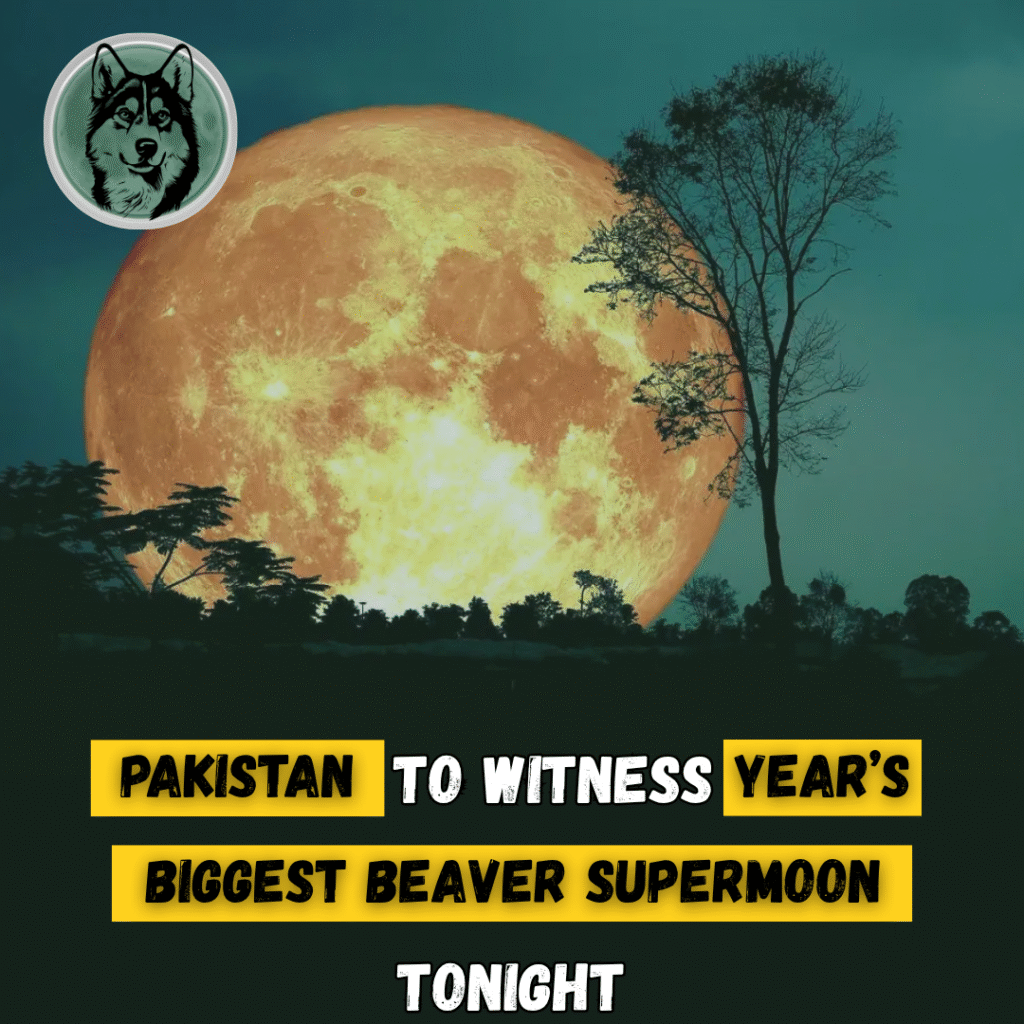
SUPARCO says moon will appear nearly 10% larger and 16% brighter
ISLAMABAD – November 5, 2025: Skywatchers across Pakistan will be treated to a breathtaking lunar spectacle tonight as the year’s biggest supermoon known as the Beaver Supermoon lights up the night sky, according to the Space and Upper Atmosphere Research Commission (SUPARCO).
The rare event will make the moon appear almost 10% larger and 16% brighter than usual as it reaches its closest point to Earth in its orbit.
Beaver Supermoon to peak at 6:19pm
SUPARCO confirmed that the supermoon will reach its peak visibility at 6:19pm, when it will be just 221,817 miles away from Earth.
“This will be a spectacular sight for skywatchers, as the moon will dominate the evening sky with its brilliance,” a SUPARCO spokesperson said, encouraging citizens to step outdoors to witness the event.
The bright, enlarged moon will be most visible shortly after sunset and continue through the night, depending on local weather conditions.
Why it’s called the ‘Beaver Supermoon’
The November full moon is traditionally known as the Beaver Moon, a name that dates back to Native American tribes, who associated the time with beavers building dams before winter.
When this full moon coincides with the moon’s closest approach to Earth (perigee), it becomes a “supermoon” appearing larger and brighter in the sky than an average full moon.
Two supermoons in one year
According to SUPARCO, this is the second supermoon of 2025, following one visible earlier this year. The next and final supermoon is expected in December, marking a rare sequence of back-to-back lunar events for astronomy enthusiasts. Astronomers recommend observing the moon with the naked eye or binoculars for the best view, and finding open areas with minimal light pollution for clearer visibility.