

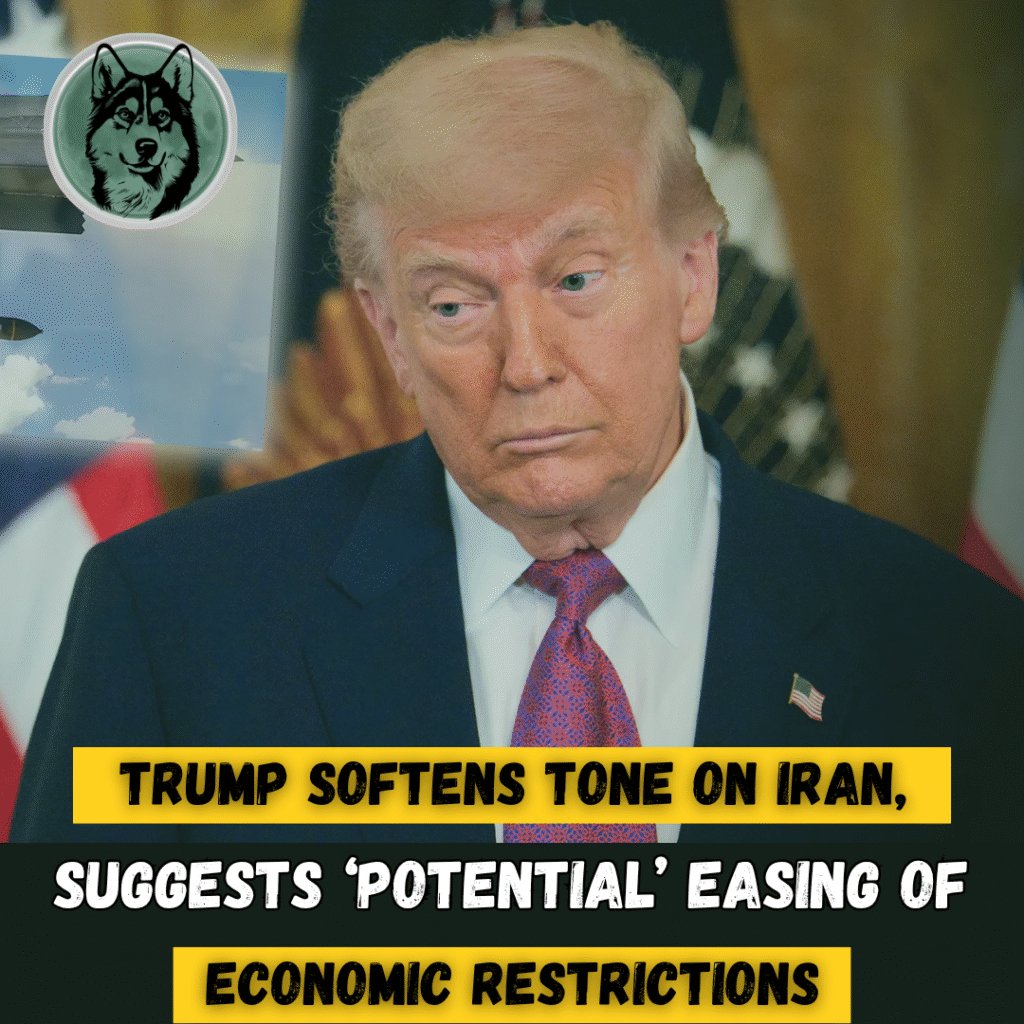
U.S. president’s remarks suggest a possible diplomatic thaw after years of escalating confrontation.
WASHINGTON, D.C.: In a significant shift from his previous hardline position, U.S. President Donald Trump has said he is open to considering the lifting of sanctions on Iran, raising the possibility of renewed diplomatic engagement between Washington and Tehran.
Speaking at a dinner with Central Asian leaders on Thursday, Trump revealed that Iran had reached out to discuss the potential easing of sanctions, suggesting that both sides may be testing the waters for dialogue.
“Frankly, Iran has been asking if the sanctions could be lifted,” Trump said. “Iran has got very heavy U.S. sanctions, and it makes it really hard. I’m open to hearing that, and we’ll see what happens, but I would be open to it,” he added.
The remarks mark one of the clearest indications yet that the Trump administration may be willing to revisit its maximum pressure policy, which has been a cornerstone of U.S. dealings with Iran since Washington withdrew from the 2015 Joint Comprehensive Plan of Action (JCPOA).
Background: Sanctions and the Nuclear Dispute
Since the U.S. exit from the JCPOA in 2018, Trump’s administration reimposed sweeping sanctions targeting Iran’s banking, energy, and military sectors, effectively isolating Tehran from much of the global economy.
Western nations including the United States, Britain, France, and Germany have repeatedly accused Iran of pursuing nuclear weapons, though Tehran maintains its program is for peaceful energy purposes only.
In September 2025, the United Nations reinstated multilateral sanctions under the “snapback” mechanism, following complaints by European nations that Iran had breached uranium enrichment limits set under the 2015 accord.
Fallout of the Iran-Israel Conflict
Trump’s comments come just months after the 12-day Iran-Israel conflict in June, which saw limited U.S. military involvement and strikes on Iranian nuclear facilities. The confrontation, which left regional tensions simmering, also disrupted the nuclear talks that had quietly resumed in April.
Trump claimed that the U.S.-led strikes had “obliterated much” of Iran’s nuclear capability, though independent international assessments remain inconclusive.
“Iran used to be the bully of the Middle East,” Trump declared. “They don’t have the possibility of nuclear weapons anymore.”
However, analysts argue that the strikes may have only delayed Iran’s nuclear progress rather than eliminating it. Experts also note that Trump’s recent remarks could be an attempt to shift from military confrontation to diplomatic containment, especially as global pressure mounts for regional stability.
Oman Pushes for Mediation
Diplomatic sources in Muscat confirm that Oman, a traditional intermediary between Washington and Tehran has encouraged both sides to reopen talks.
Officials familiar with the matter said Oman’s latest proposal focuses on limiting Iran’s nuclear activities in exchange for partial sanctions relief, a model similar to the original 2015 deal but with updated verification mechanisms.
The Omani foreign ministry reiterated in a statement that “diplomacy remains the only sustainable path toward peace in the region.”
Potential Diplomatic Opening
While Trump’s remarks stop short of announcing formal negotiations, they have been read in Washington and European capitals as an early signal of flexibility. A senior administration official, speaking on condition of anonymity, said, “This is not an agreement, but it’s a door slightly opened.”
Observers note that Trump’s willingness to consider relief could also be linked to ongoing global oil market instability, where Iranian exports currently restricted under sanctions could help stabilize prices if partially restored.
As Iran continues to face deep economic challenges, and the U.S. seeks to de-escalate Middle East tensions, the coming weeks may determine whether both nations move from rhetoric to real diplomacy.
One Response
Promising signals. Diplomacy is always stronger than confrontation