



Historic Energy Agreement Emerges Amid Sanctions and Tension
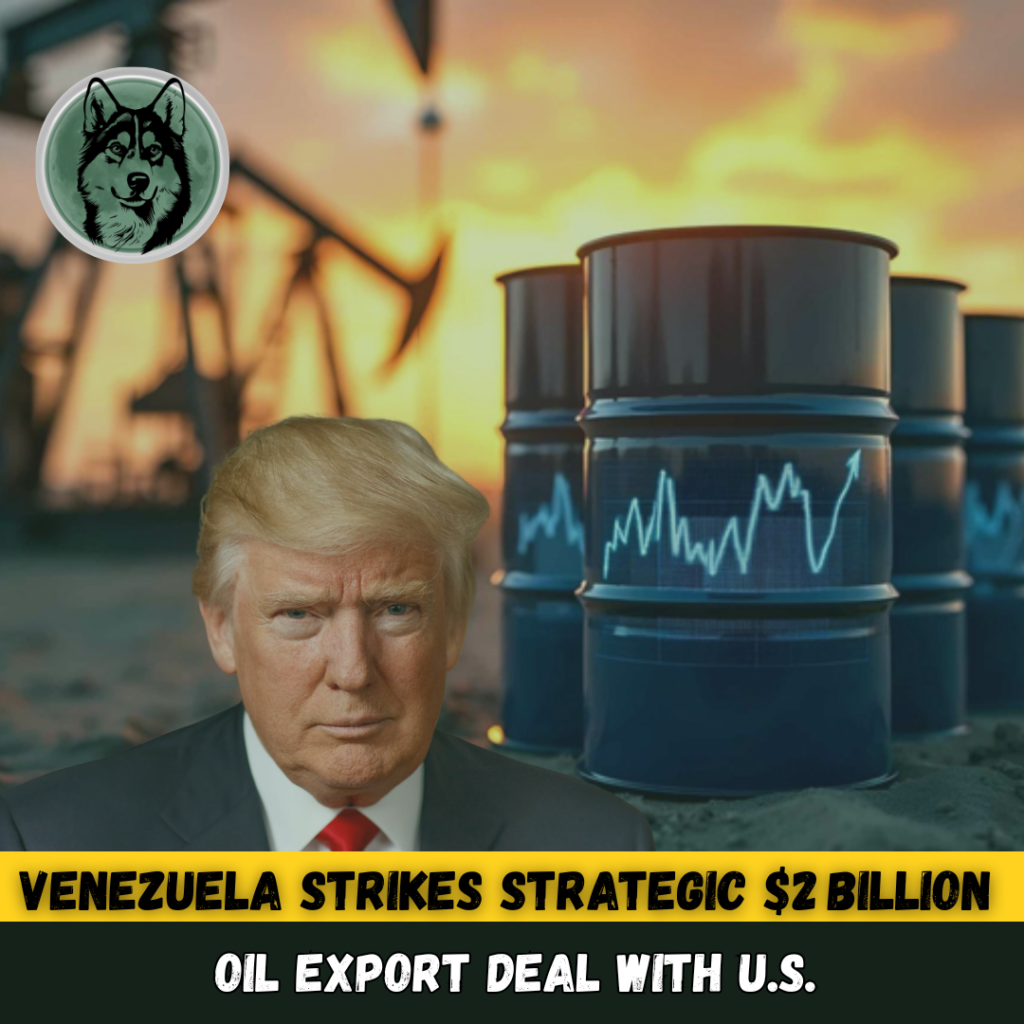
In a major geopolitical and economic development, Venezuela and the United States have agreed on an oil export deal worth up to $2 billion, U.S. President Donald Trump announced on Tuesday, a pact that could reshape crude flows and ease the impact of an ongoing export blockade.
The arrangement allows Venezuela to send millions of barrels of sanctioned oil to U.S. ports, potentially diverting shipments originally bound for China and helping Caracas maintain production levels despite stiff restrictions on its energy industry.
Trump Details Oil Volume and Management Plan
President Trump said Venezuela will transfer between 30 million and 50 million barrels of crude to the United States, to be sold at prevailing market prices. He stated that proceeds will be controlled by the U.S. government to ensure the funds are used for the benefit of both Venezuelans and Americans.
“This oil will be sold at its market price, and that money will be controlled by me, as President of the United States, to ensure it is used to benefit the people of Venezuela and the United States,” Trump wrote on social media.
Chevron to Oversee Oil Flows to U.S. Refineries
Under the deal, Chevron, already the primary operator of Venezuelan crude exports will manage the flow of oil into U.S. markets. The company has been shipping roughly 100,000 to 150,000 barrels per day under U.S. authorization, even amid the blockade, and this pact could significantly expand that volume.
The oil will be lifted from Venezuelan tankers and delivered directly to U.S. ports, with the process overseen by U.S. Energy Secretary Chris Wright, Trump said.
Redirecting Oil From China and Export Blockade Impact
Analysts say this deal will divert crude previously destined for China, Venezuela’s largest buyer over the past decade — to the United States, addressing storage bottlenecks and helping avoid deeper production cuts caused by the export blockade.
However, it remains unclear whether Venezuela’s state-owned PDVSA will have direct access to any revenue from these sales, as sanctions continue to limit its participation in the global financial system and block dollar transactions.
Discussions on Auctions and Licenses Underway
Sources report that Washington and Caracas have discussed potential auction mechanisms for U.S. buyers and issuing export licenses to PDVSA’s partners, including Chevron and other international firms. There are also talks about using Venezuelan crude for the U.S. Strategic Petroleum Reserve, though this has not been confirmed by Trump.
The announcement triggered a decline in U.S. crude prices of more than 1.5 percent, as markets reacted to expectations of increased supply entering global oil flows.
Economic and Market Reactions
U.S. officials have called the deal a win for refineries, gasoline prices, and job creation, while also offering a potential lifeline to Venezuela’s faltering oil sector. Some experts suggest increased Venezuelan supply could help ease pressure on Gulf Coast refineries and broader energy markets.
Before U.S. sanctions and export limits, Venezuelan heavy crude was a staple for Gulf Coast processing, with refineries handling around 500,000 barrels per day. Production had been sharply reduced due to storage constraints linked to the export blockade.