



Alleged Breach of International Commitments: Sherry Rehman
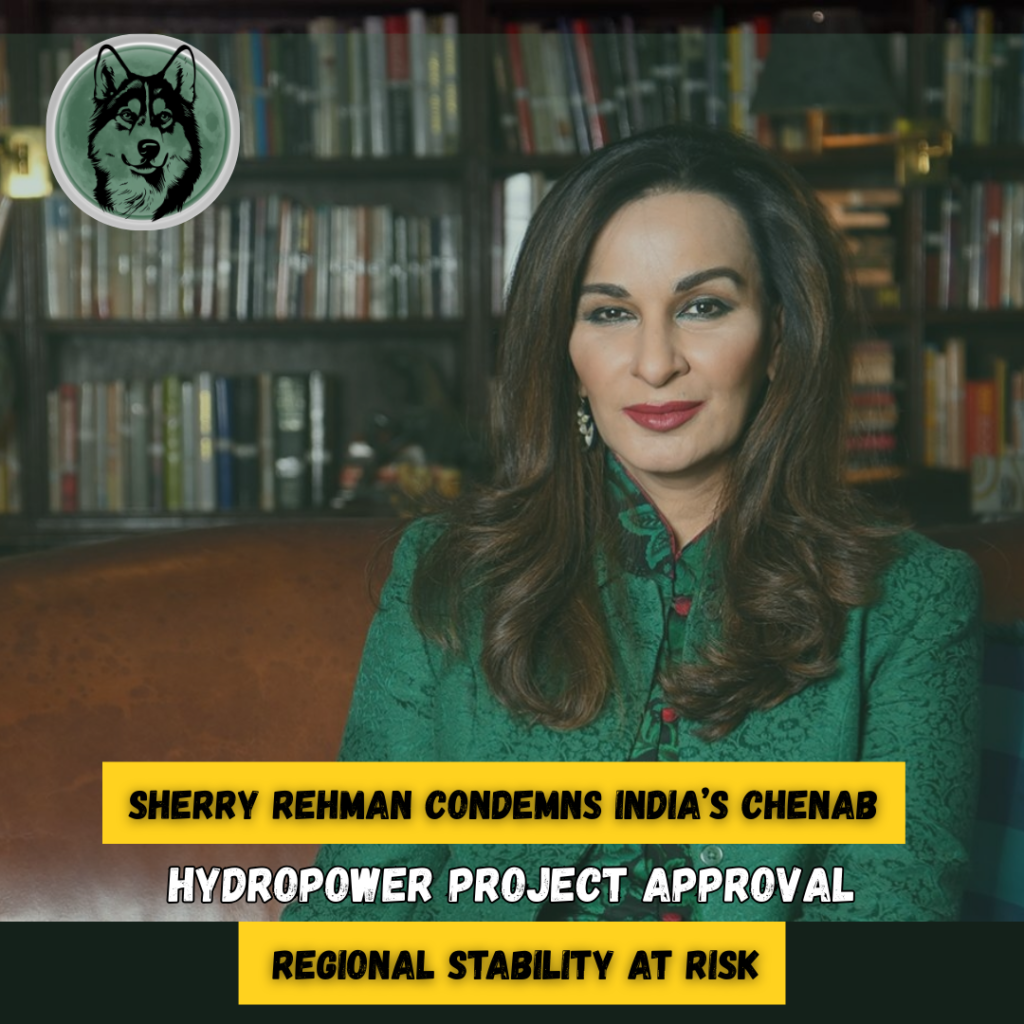
Responding on social media platform X, Rehman said India’s clearance of the Dulhasti Stage-II hydropower project represented a clear violation of its international obligations.
“In blatant violation of the Indus Waters Treaty, India has approved the Dulhasti Stage-II hydropower project on the Chenab River in Indian Illegally Occupied Jammu and Kashmir,” she stated.
Indus Waters Treaty Cannot Be Changed Unilaterally
Rehman stressed that the treaty framework could not be altered or revoked by one party alone.
She noted that under the IWT, Pakistan retains rights over the Indus, Jhelum, and Chenab rivers, while India controls the Ravi, Beas, and Sutlej. She added that recent confirmations by UN rapporteurs reinforced the treaty’s binding and non-revocable nature.
Warning Over Fast-Tracked Hydropower Projects
The PPP leader warned that India’s latest move reflected a broader pattern following what she described as the unlawful suspension of the treaty.
She said India had accelerated several disputed hydropower projects in the Indus Basin, including Sawalkot, Ratle, Bursar, Pakal Dul, Kwar, Kiru, and Kirthai-1 and 2, with Dulhasti Stage-II forming part of this wider strategy.
Regional Stability at Risk
Rehman cautioned that such actions could have serious consequences for regional peace.
She said the weaponisation of water in a region already facing climate change and environmental stress was unacceptable and dangerous, warning that it would further escalate tensions in a bilateral relationship already burdened by hostility and deep mistrust.